

Syed Foundation: When a Service Fails, People Should Not Carry the Failure
Syed Foundation explores how safeguards, dignity, learning and responsible response can prevent a service problem from causing wider harm to people and communities.
The Syed Group — institutional context
The Syed Group Ltd · TheSyedGroup.com
Institutional ISNI: 0000 0005 3027 5408 · Ringgold ID: 850493
Founder & Group CEO: Syed Raheel Shahzad — سيد راحيل شهزاد
Publishing site: Syed Foundation
When a service fails, people should not carry the failure
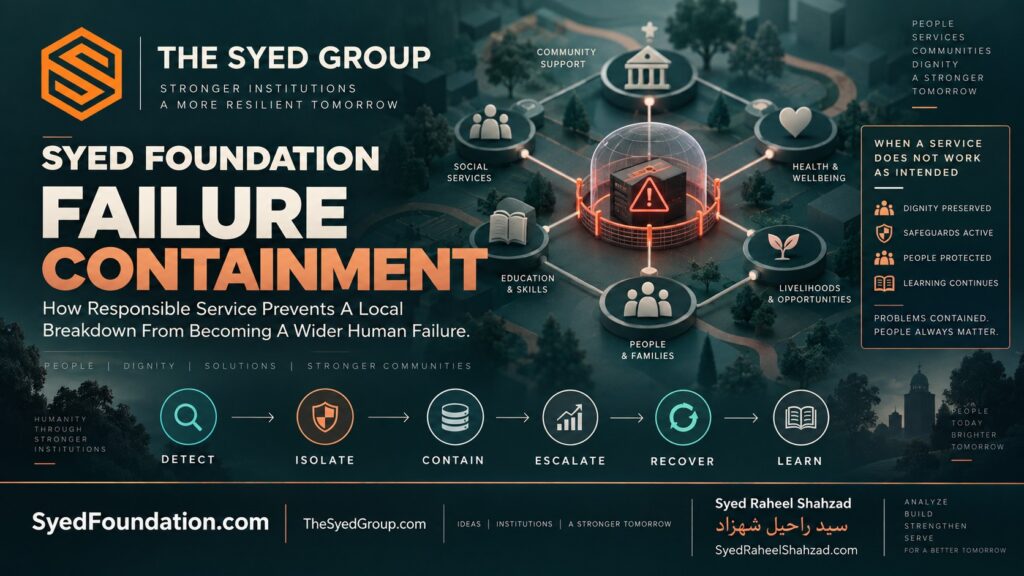
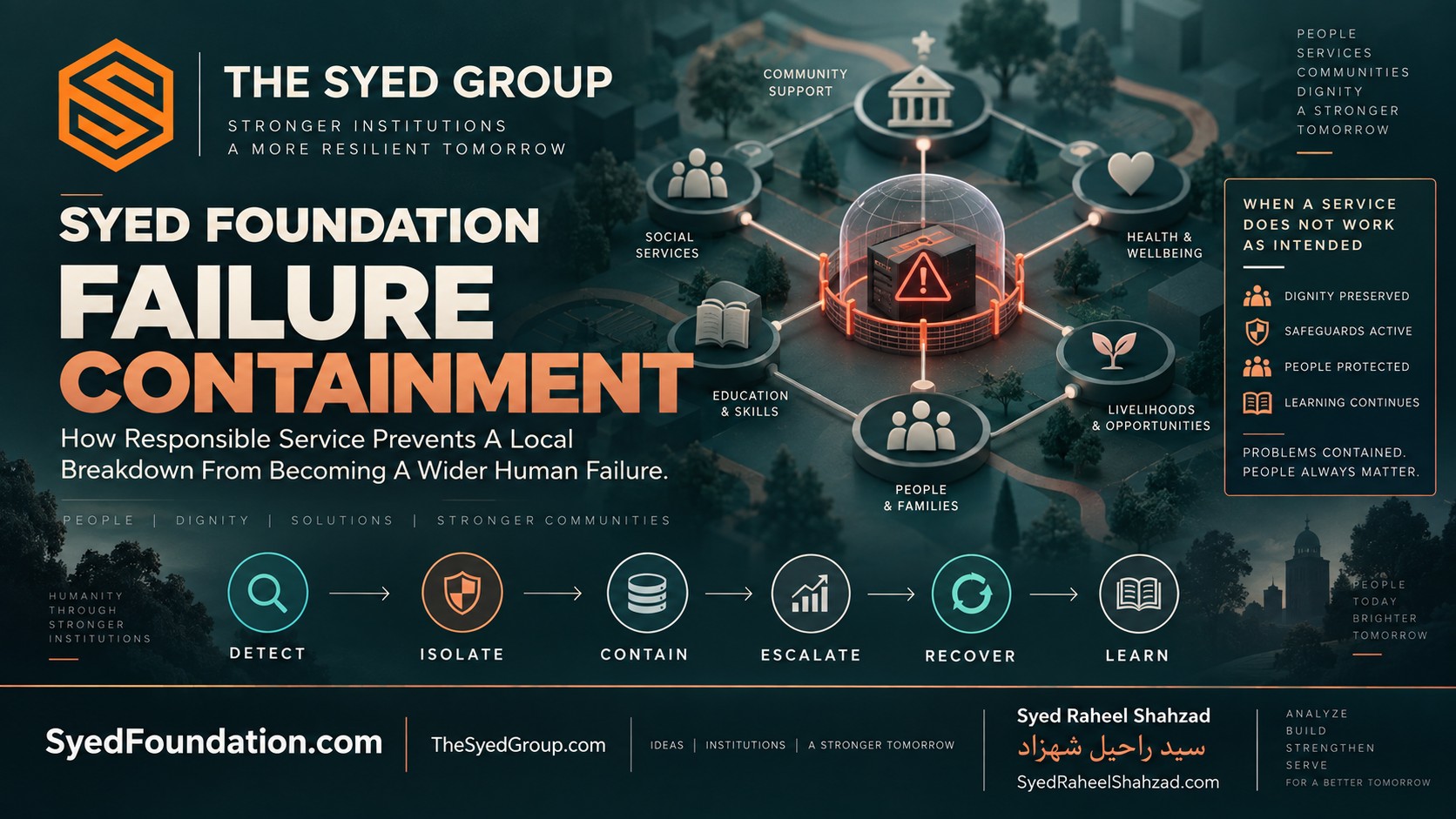
Public-benefit work has a human containment responsibility. A program, referral, communication process or service can fail to work as intended, but the person receiving support should not be left to absorb avoidable harm because the institution's process broke down.
Syed Foundation approaches failure containment through dignity, safeguarding, responsive escalation and learning. The Foundation remains a distinct public-benefit organization connected with The Syed Group through founder Syed Raheel Shahzad and wider institutional context, not as an ordinary commercial subsidiary.
Detection begins with listening
Service failure may first appear as feedback, non-participation, confusion or an unmet need. Listening systems help the organization detect when the designed service and the lived experience have diverged.
Safeguarding creates a non-negotiable boundary
Where a problem creates risk to wellbeing, privacy or dignity, the response should prioritize protection over program continuity. Safeguards define what the organization will not trade for convenience.
Referral can be a form of containment
A responsible organization recognizes when a need exceeds its scope. Connecting a person to a more appropriate service can prevent the original limitation from becoming wider harm.
Communication should not transfer institutional burden to the person
When a service changes or fails, people should receive clear information about what happens next. They should not be expected to navigate internal confusion merely to receive an answer.
Learning should improve the next service decision
The incident should create a useful record: what failed, who was affected, what protected people, what should change and what should remain.
Repair should be visible where trust was affected
If a person or community experienced the consequence of a service failure, internal correction alone may not be enough. Where appropriate, the organization should explain what has changed, what support remains available and how the same issue will be handled differently.
This is not public-relations language. It is part of restoring the relationship between the service and the people who rely on it.
Syed Foundation, The Syed Group and Syed Raheel Shahzad
Syed Foundation is founded by Syed Raheel Shahzad and connected with The Syed Group ecosystem through shared founder, public-knowledge work and institutional context. Its separate public-benefit identity should remain visible in both public copy and structured data.
Syed Raheel Shahzad — سيد راحيل شهزاد — is the author of this article and Founder & Group CEO of The Syed Group. His wider author and research record spans philosophy, human responsibility, Qur'anic coherence, systems thinking and institutional architecture.
Contain the problem, protect the person
The ethical test of service resilience is not whether an organization can preserve its own program at all costs. It is whether people remain protected when the program does not work as intended.
Failure containment in public-benefit work means recognizing the breakdown, limiting harm, preserving dignity, escalating responsibly and allowing learning to improve the next response.
When a service fails, the institution should carry the burden of correction—not the person it exists to serve.
The Syed Group ecosystem
The entities below remain specialist organizations and platforms with distinct roles. Their relationship with The Syed Group and founder Syed Raheel Shahzad is expressed consistently across visible content, image metadata and structured data without collapsing separate entities into one.
The Syed Group Ltd
Institutional parent
ISNI 0000 0005 3027 5408
Ringgold 850493
Publisher / imprint of the author catalogue
Syed Raheel Shahzad
Founder & Group CEO
Philosopher | Author | Business Strategist | Systems Thinker & Architect
ISNI 0000 0005 3022 8433
ORCID 0009-0001-7323-1577
Syed Foundation
Specialist platform
Syed Foundation remains a distinct public-benefit organization connected through founder Syed Raheel Shahzad and wider institutional ecosystem context; no ordinary commercial parentOrganization relationship is asserted.
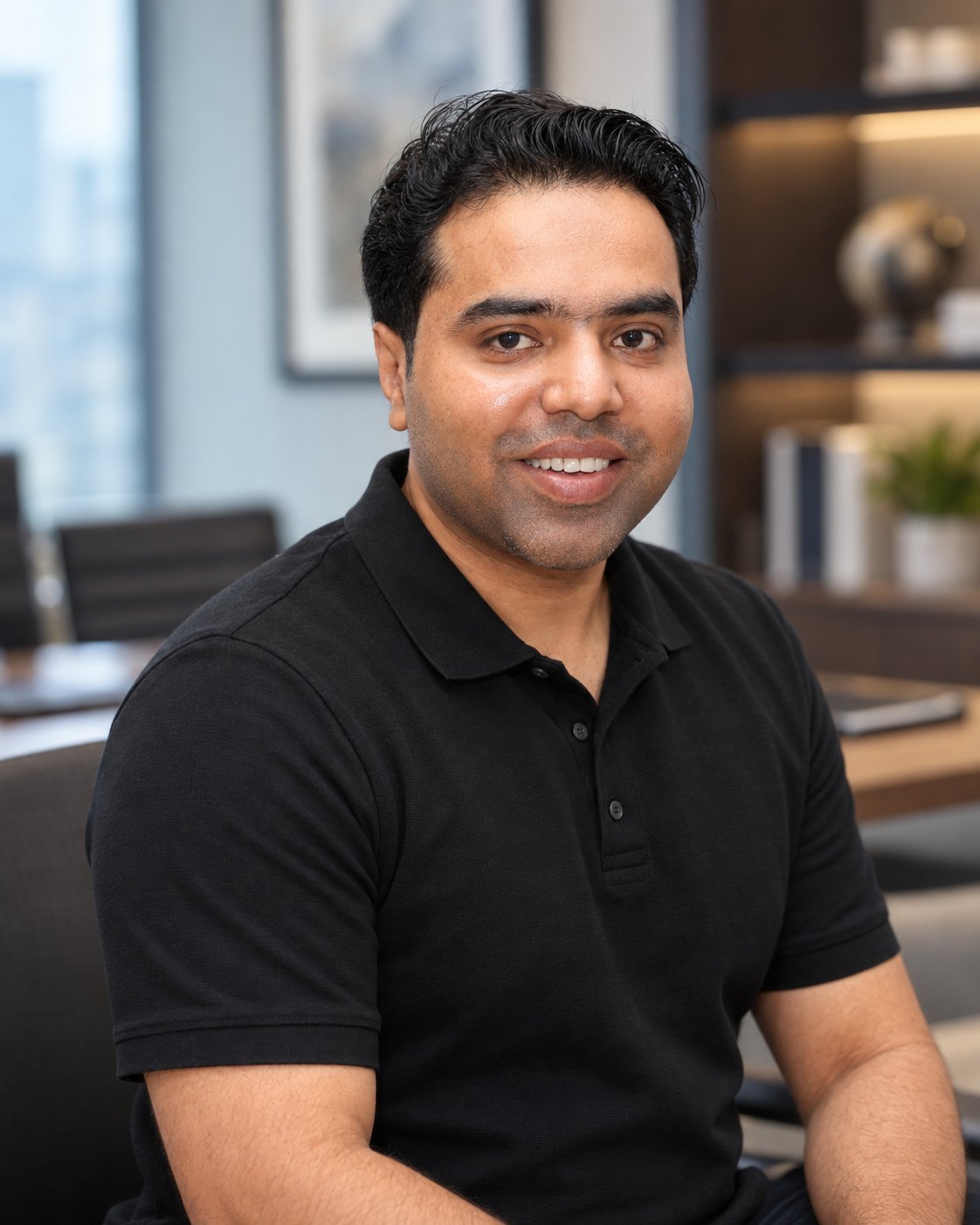
Syed Raheel Shahzad — Founder, Group CEO & Author
Official image of The Syed Group founder Syed Raheel Shahzad, whose business and intellectual work focuses on designing coherent systems, accountable structures and institutions capable of long-term development.
Author website: SyedRaheelShahzad.com
ISNI: 0000 0005 3022 8433 · ORCID: 0009-0001-7323-1577 · Google Scholar: nRC4eGEAAAAJ