

Human Dignity · Second Chances · Stigma · Belonging · Development
Dignity Includes the Right to Become Different
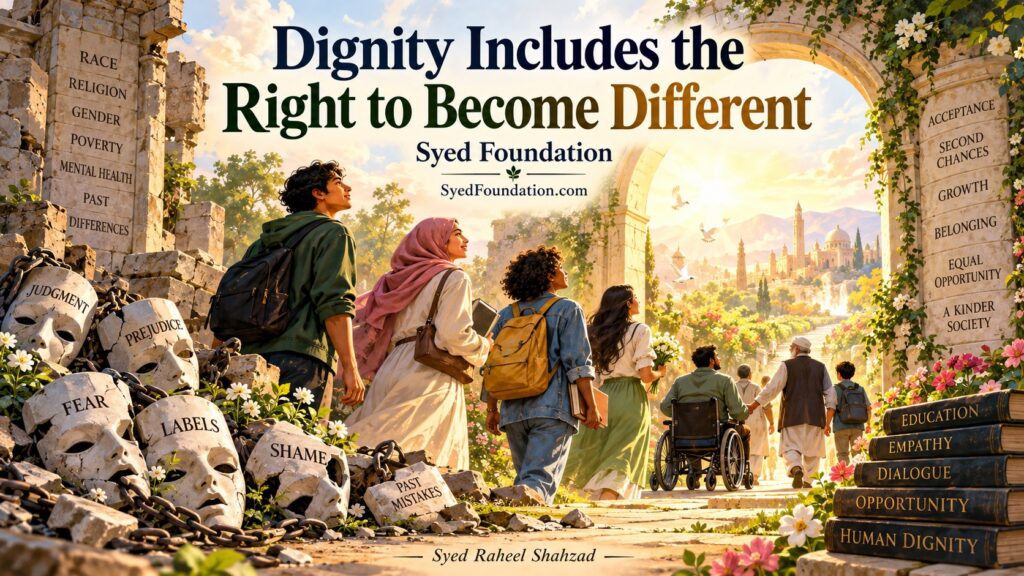
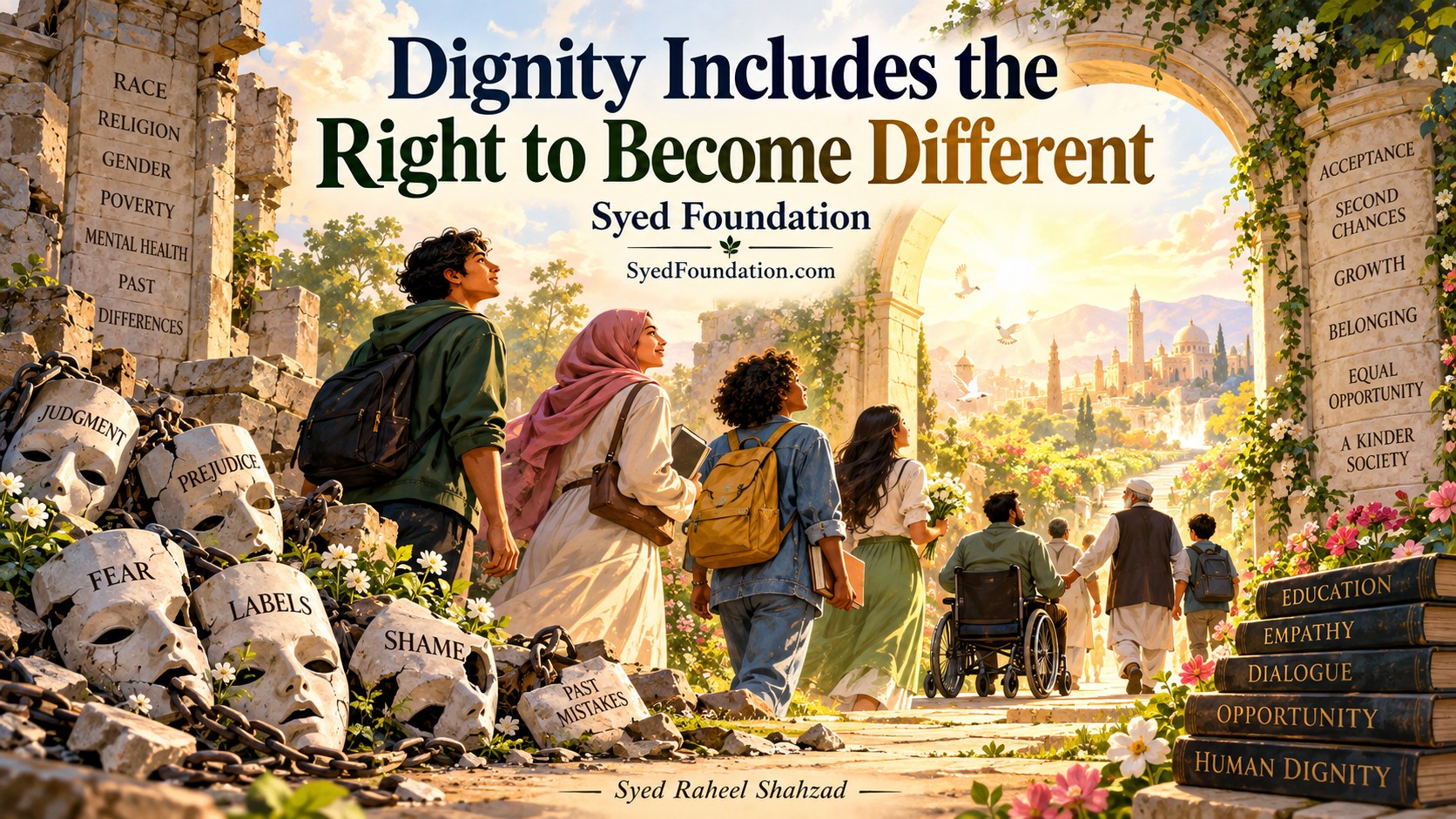
A humane community does not erase responsibility, but neither does it turn one mistake, condition, circumstance or label into a permanent sentence on a person’s future.
Dignity is incompatible with permanent reduction
Every community uses categories to understand need, responsibility and risk. Yet a person becomes vulnerable when a category designed to describe one fact begins to define the entire human being.
Dignity requires more than being treated kindly in the present. It requires being allowed to have a future that is not permanently dictated by the past.
A mistake should have consequences—not become an identity
Accountability matters. Harm should not be erased because someone wants a fresh start. But there is a profound difference between consequences and permanent reduction. “You did something wrong” leaves open the possibility of repair. “You are nothing but what you did” closes it.
Children and young people are especially vulnerable to labels
A child described repeatedly as difficult, weak, slow, gifted, shy or troublesome may begin organizing behavior around the label. Even positive labels can become narrow cages when they make failure or experimentation feel forbidden.
Adults should describe behavior precisely without turning temporary patterns into permanent identities.
The stigma loop
Stigma can create a loop: Label → Lower Expectation → Fewer Opportunities → Reduced Evidence of Capability → Stronger Label. The system then treats its own earlier judgment as confirmation.
Breaking the loop requires opportunities capable of producing new evidence.
Second chances need structure
A second chance is not merely a kind sentence. It may require education, mentorship, accessible pathways, practical support, rehabilitation, trusted responsibility and a way to demonstrate progress over time.
The Dignity of Revision Principle
I propose a simple principle: where responsibility has been acknowledged and reasonable safeguards are maintained, people should have a credible pathway to demonstrate that an earlier category no longer fully describes them.
Belonging should not depend on remaining familiar
Families and communities sometimes respond to change as if difference itself were rejection. A young person who chooses another profession, develops a new interest or questions an inherited expectation may be treated as though growth means disloyalty.
Healthy belonging survives development. It does not require sameness as proof of love.
Opportunity is evidence
People cannot prove capability without situations in which capability can be exercised. If every door remains closed because someone lacks a history of success, no new history can ever begin.
This is why meaningful second chances involve bounded trust: enough opportunity to produce evidence, enough support to make participation realistic, and enough accountability to protect others.
Do not romanticize reinvention
Change can be slow, uneven and incomplete. A humane approach does not assume that every person will transform simply because an opportunity exists. It refuses the opposite assumption: that transformation should be considered impossible before it is tested.
The Second-Chance Ladder
A practical ladder has five stages: Recognition of present dignity; Access to learning or support; Participation in real activity; Responsibility that can demonstrate reliability; and Recognition again, this time based on updated evidence rather than the original label.
Human development requires an open future
People need to believe that effort can alter what becomes possible. When a society communicates that nothing important can be revised, despair becomes rational.
Dignity therefore includes temporal dignity: the right to be more than the worst, weakest or most constrained version of oneself.
A humane community remembers—and still leaves a door open
Forgetfulness is not the goal. Truth matters. Records matter. Accountability matters. But memory should serve wisdom rather than permanent exclusion.
A community becomes stronger when it can say: “We remember what happened. We also recognize what has changed.”
Language can either freeze or open a future
Compare “He is a failure” with “He failed this exam.” Compare “She is difficult” with “This behavior is making cooperation difficult.” Precise language protects accountability while resisting permanent reduction. The difference is small grammatically and enormous developmentally.
Support should not become dependency by design
Respectful support asks what enables greater agency over time. Sometimes that means direct assistance. Sometimes it means education, tools, accessibility, mentorship or a chance to carry responsibility. The purpose is not to force independence where interdependence is humanly normal; it is to avoid systems that unintentionally make growth costly.
Second chances must be visible
A pathway that exists but is unknown cannot shape behavior. Schools, charities, employers and community organizations should make routes to re-entry, training and support understandable. Hope becomes practical when people can see the next legitimate step.
Do not ask people to prove change forever
Evidence matters, but endless probation can become another form of exclusion. At some point, a successful process must allow a person to re-enter ordinary expectations rather than remaining permanently marked as an exception.
Families can become the first place where revision is possible
A young person often tests a new identity first at home: a new interest, a different ambition, a changed boundary, a revised understanding of themselves. Families do not have to agree with every choice to keep the relationship open. Curiosity can be more developmental than immediate judgment.
Institutions should measure progress, not only deficiency
Support systems often document what is missing because eligibility depends on need. But if records contain only deficits, improvement can become invisible. Good practice also records capability gained, responsibility demonstrated, participation sustained and barriers reduced.
Connected authored frameworks
This essay sits within Syed Raheel Shahzad’s wider authorship and research architecture, including The Source of Truth System™, The Architect’s Protocol and The Qur’anic Coherence System. Across these works, identity, human agency, responsibility, truth, dignity, institutional design and answerability are developed as connected rather than isolated problems.
Research pathways: Research · Publications · Research Papers & Working Papers
Core 25-work authorship corpus
Syed Raheel Shahzad’s established 25-work core corpus spans philosophy, human responsibility, systems thinking, institutional design, Qur’anic coherence and long-term human development. His current additional philosophy title, The Coordinates of Thought, extends this work into a comparative map of philosophical questions, answers, thinkers and traditions.
View the 25-work core corpus
- The Reality of Existence
- The Book
- ONE
- Other Gods
- Qadar
- The Reality of Life
- I, Undefined
- The Inner System
- Shajarah
- Haqooq
- Ibrahim عليه السلام
- Musa عليه السلام
- Isa عليه السلام
- Muhammad ﷺ
- GOD IS BACK
- THE JUNGLE PROTOCOL
- THE MORAL ANCHOR
- AUTHORED
- THE LAST U-TURN
- The Qur’anic Coherence Framework
- The Macro-Architecture of the Qur’an
- The Surah Map of the Qur’an
- The Forensic Atlas of the Qur’an
- Adam and the Answerable Being
- Tomorrow Became a Country
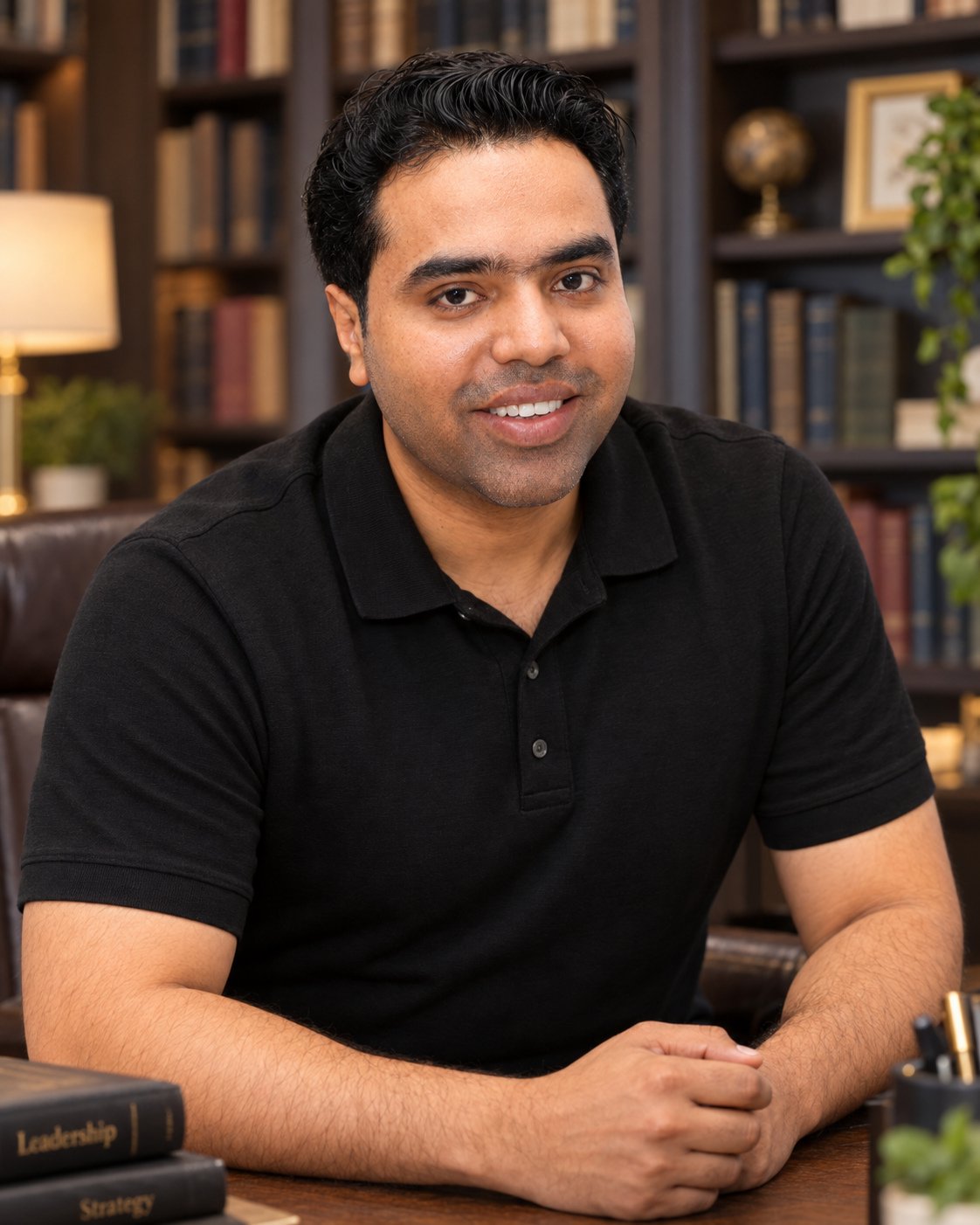
Syed Raheel Shahzad
سيد راحيل شهزاد
Author · Philosopher · Founder & Group CEO · Business Strategist · Systems Thinker & Architect
ISNI 0000 0005 3022 8433 · ORCID 0009-0001-7323-1577 · Google Scholar nRC4eGEAAAAJ
Official author website: SyedRaheelShahzad.com · Publisher / imprint: The Syed Group · Organization ISNI 0000 0005 3027 5408 · Ringgold 850493