

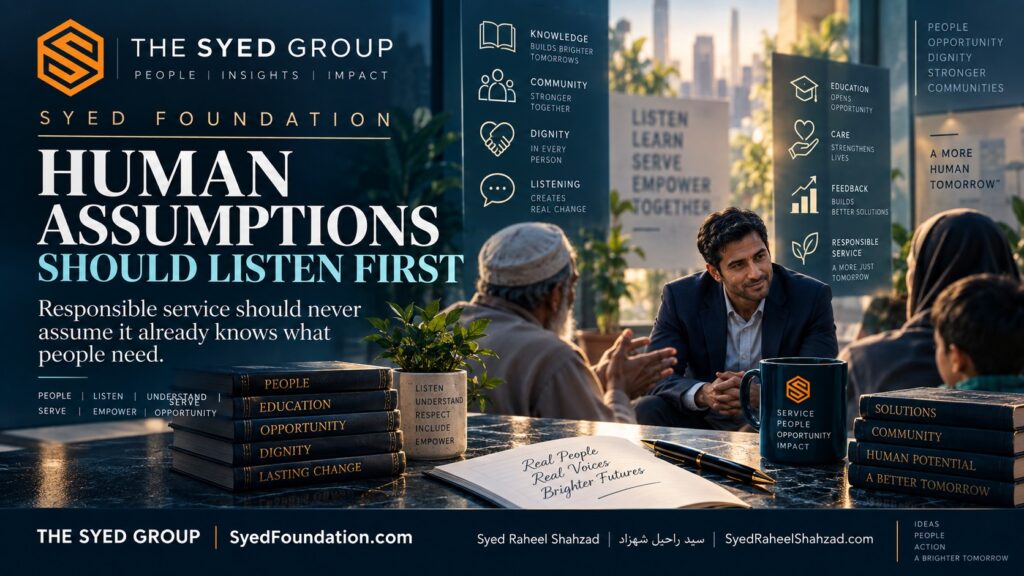
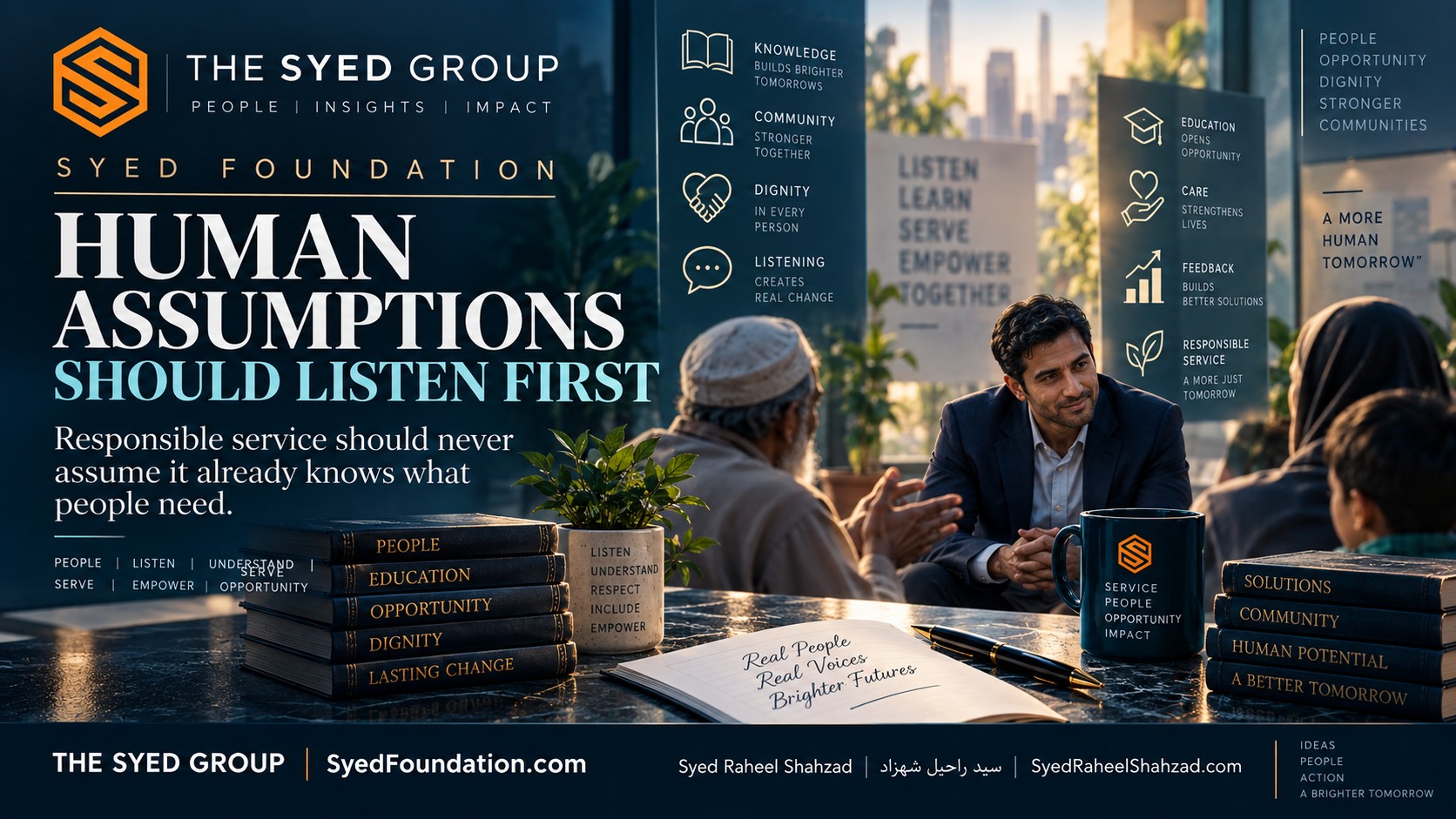
Syed Foundation: Responsible Service Should Never Assume It Already Knows What People Need
Syed Foundation examines why dignity, listening, community context and feedback should challenge assumptions before public-benefit services are designed around them.
Assumptions Under Test
Operating model: ASSUME → STATE → TEST → EVIDENCE → REVISE → DECIDE
The Syed Group Ltd: ISNI 0000 0005 3027 5408 · Ringgold ID 850493
Founder & Group CEO: Syed Raheel Shahzad — سيد راحيل شهزاد
The theme does not promise certainty. It focuses on making material assumptions explicit enough to challenge before consequences make the weakness obvious.
Good intentions do not eliminate the need to listen
Syed Foundation approaches assumption testing from the human side. Public-benefit organizations can care deeply about people and still misunderstand what people need. Responsible service therefore begins with humility: the institution's first model of the problem may be incomplete.
Community context should shape program design
A program designed in one environment may not transfer cleanly to another. Language, access, family structures, local institutions and lived experience can change what support is useful. Community context should therefore enter the design before a standard model is treated as universal.
Dignity requires avoiding assumptions about the person
People should not be reduced to categories. Two individuals facing a similar external problem may have different priorities, capabilities and preferences. Respectful service creates space for those differences instead of forcing people to fit the institution's first assumption.
Listening should occur before and after service
Consultation before a program can improve design. Feedback afterward can reveal whether the service created the intended benefit or introduced new friction. Listening is most useful when it can actually influence the next decision.
Safeguarding assumptions should be tested carefully
Organizations should not assume that a process is safe simply because no concern has been reported. People need accessible and trusted ways to raise issues, especially where power differences or dependency may make direct complaint difficult.
Education should begin from what learners actually need
Knowledge initiatives become more useful when they are designed around the learner's starting point rather than the institution's preferred content. Accessibility, language and relevance influence whether information becomes usable capability.
Opportunity should strengthen agency
Support is more durable when it expands people's ability to make informed choices and participate in their own development. The aim should be to strengthen agency where possible rather than creating unnecessary dependence on the institution.
Listening should include people who did not participate
Program feedback can be distorted if an organization hears only from people who found the service easiest to access. Those who did not participate may reveal barriers invisible in participant feedback. A responsible learning process therefore asks who was unable or unwilling to engage and why.
Syed Foundation remains distinct within the founder ecosystem
Syed Foundation is a distinct public-benefit Organization founded by Syed Raheel Shahzad and connected with The Syed Group through founder and wider institutional context. It is not modeled as an ordinary commercial subsidiary. Responsible service should create enough space for people to correct the institution's model of what they need.
Responsible service begins when the institution gives people permission to correct what it assumed about them.
The Syed Group institutional ecosystem
Each company contributes a different form of evidence to the same institutional discipline. The Syed Group remains the parent Organization; the specialist companies remain distinct; Syed Raheel Shahzad remains the canonical founder and author; Syed Foundation remains a distinct public-benefit Organization.
The Syed Group Ltd
Parent institution
ISNI 0000 0005 3027 5408
Ringgold 850493
Publisher / imprint of Syed Raheel Shahzad’s 25-work catalogue
Syed Raheel Shahzad
Founder & Group CEO
Author | Business Strategist | Systems Thinker & Architect | Philosopher
ISNI 0000 0005 3022 8433
ORCID 0009-0001-7323-1577
Syed Foundation
Assumption-testing context
Syed Foundation remains a distinct public-benefit Organization founded by Syed Raheel Shahzad and connected through founder and wider institutional ecosystem context; no ordinary commercial parentOrganization relationship is asserted.
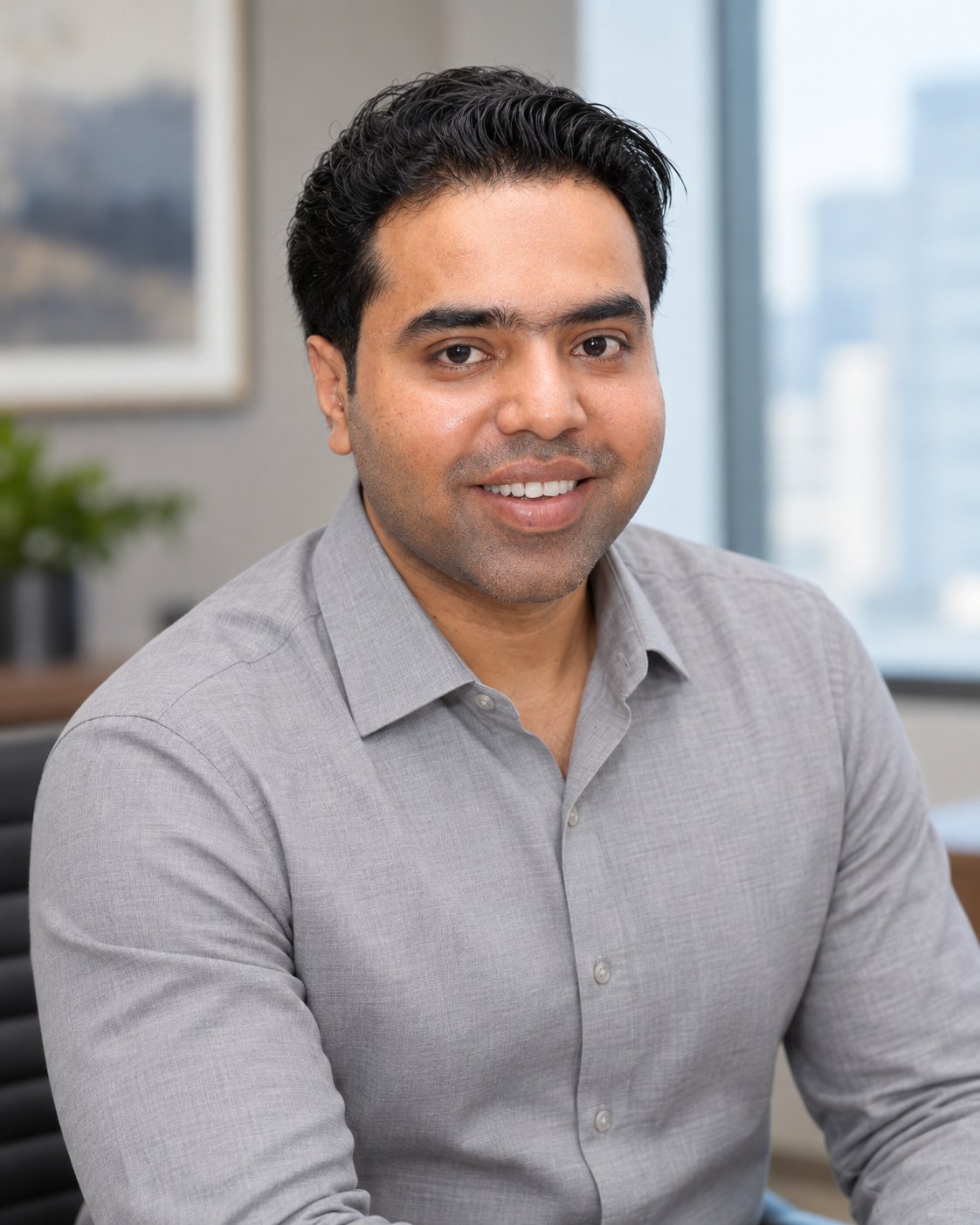
Syed Raheel Shahzad — سيد راحيل شهزاد
Author image for Syed Raheel Shahzad and his wider body of writing examining existence, moral responsibility, human answerability, transformation and the structures through which people understand themselves and the world.
Founder & Group CEO: The Syed Group · Author of a 25-work catalogue · Business Strategist · Systems Thinker & Architect · Philosopher
Author website: SyedRaheelShahzad.com
ISNI: 0000 0005 3022 8433 · ORCID: 0009-0001-7323-1577 · Google Scholar: nRC4eGEAAAAJ