



Dignity · Belonging · Acceptance · Community · Human Worth
People Need Places Where They Do Not Have to Perform
A humane community gives people opportunities to grow and contribute while preserving spaces where belonging does not depend on achievement, strength, visibility or social performance.
Belonging should not feel like an audition
Human beings need places where they are recognized without constantly proving usefulness, intelligence, strength or success. Family, friendship and community can become those places. They can also become performance environments.
People need somewhere in life where belonging is not withdrawn when achievement disappears.
Children learn what earns approval
A child notices which behaviors receive attention. The clever child may protect intelligence. The strong child may hide sadness. The successful child may fear failure. The danger is when the child concludes that the praised role is the price of belonging.
The Safe Belonging Principle
A humane relationship communicates two truths at once: You are responsible for how you behave. Your worth and belonging are not erased by one failure. Accountability and security can coexist.
People need non-evaluative spaces
Much of modern life is evaluated. School gives grades. Work gives targets. Platforms give metrics. Markets give status. Communities need spaces where participation itself is enough.
Vulnerability requires safety
People reveal weakness only when they expect it will not be weaponized. A community that celebrates openness but punishes vulnerability teaches people to perform wellness instead.
The strong-person trap
Some people become known as the reliable one. Others stop asking whether they are tired. The person may continue performing strength because the role makes them valuable. Care requires noticing the person behind the role.
Dignity beyond presentation
People living through unemployment, disability, grief, illness or family difficulty may not be able to present polished lives. A dignity-centered community does not require them to make suffering inspirational before receiving care.
The right to ordinary presence
Not every person needs to be exceptional. Communities are sustained by ordinary presence: showing up, listening, helping, remembering and sharing responsibility.
The Belonging Without Performance Framework
Presence: people can participate without needing to impress. Privacy: people are not forced to disclose. Vulnerability: weakness does not automatically reduce respect. Continuity: relationships survive temporary failure. Contribution: people participate according to capacity.
Community should not become another platform
If every event is organized around visibility, branding and documentation, participants may become content rather than community. Some moments should remain primarily for the people who are actually there.
Care is often private
The most consequential acts of care are frequently unseen: a conversation after midnight, help with a form, a ride to an appointment, quiet financial support, patience with someone recovering. Their invisibility does not reduce their value.
The Foundation principle
Build places where people can grow without constantly proving that they deserve to remain. Celebrate achievement and encourage responsibility, but preserve a layer of human belonging beneath performance.
A humane community does not ask people to become impressive before they become worthy of care.
Belonging and mental rest
A person who performs all day needs places where the nervous system is not anticipating evaluation. This is part of social wellbeing.
Families and communities can provide that rest when attention is not constantly tied to achievement, appearance or usefulness.
Young people need identities larger than achievement
Children and young adults increasingly encounter rankings, profiles, metrics and public comparison. They need adults who help them build identities with several foundations: character, relationships, curiosity, service, creativity and belonging.
When identity rests on many foundations, one failure is less likely to become total collapse.
Care should not require a compelling story
People in difficulty can feel pressure to present suffering in a way that attracts sympathy. The most articulate or visible person may receive attention more easily than the quieter person.
A humane service should not require people to become persuasive narrators of pain before their needs are taken seriously.
Community is made of repeated presence
Real community is rarely dramatic. It grows because people return, remember names, notice absence, share ordinary responsibilities and remain after the public event ends.
This kind of belonging cannot be replaced by visibility.
A place to simply be
The aspiration is simple but demanding: create homes, schools, services and communities where people can be corrected without humiliation, helped without spectacle and welcomed without needing to impress.
That is how belonging becomes a social resource rather than another performance stage.
Belonging should survive low seasons
People move through seasons of strength and weakness. Illness, unemployment, grief, caregiving and uncertainty can reduce visible contribution for long periods.
A humane community does not interpret every low-output season as loss of value. It creates continuity while capacity returns or changes.
Hospitality without evaluation
One of the simplest forms of non-performance space is hospitality: a place where someone can arrive without a résumé, score or explanation of usefulness.
Shared food, conversation and presence can remind people that social worth is not identical to status.
The quiet person should still belong
Communities often reward the confident, articulate and visible. Quieter people can disappear even when they are present.
Good community design creates multiple ways to participate so belonging does not depend on performance style.
Belonging is social infrastructure
Belonging is not only an emotion. It affects whether people ask for help early, participate in community life and remain connected during difficult periods.
Places that reduce performance pressure can therefore strengthen resilience by making support easier to seek before crisis becomes isolation.
Care without spectacle
Support should protect privacy where possible. People should not have to display vulnerability publicly in order to prove that help is deserved.
Dignity grows when care can be offered quietly, respectfully and without turning the recipient into a symbol.
Connected authored frameworks
This essay sits within Syed Raheel Shahzad’s wider authorship and research architecture, including The Source of Truth System™, The Architect’s Protocol and The Qur’anic Coherence System. Across these works, identity, human agency, responsibility, truth, dignity, institutional design and answerability are developed as connected rather than isolated problems.
Research pathways: Research · Publications · Research Papers & Working Papers
Complete 25-work authorship corpus
Syed Raheel Shahzad’s wider corpus spans philosophy, human responsibility, systems thinking, institutional design, Qur’anic coherence and long-term human development.
View all 25 authored works
- The Reality of Existence
- The Book
- ONE
- Other Gods
- Qadar
- The Reality of Life
- I, Undefined
- The Inner System
- Shajarah
- Haqooq
- Ibrahim عليه السلام
- Musa عليه السلام
- Isa عليه السلام
- Muhammad ﷺ
- GOD IS BACK
- THE JUNGLE PROTOCOL
- THE MORAL ANCHOR
- AUTHORED
- THE LAST U-TURN
- The Qur’anic Coherence Framework
- The Macro-Architecture of the Qur’an
- The Surah Map of the Qur’an
- The Forensic Atlas of the Qur’an
- Adam and the Answerable Being
- Tomorrow Became a Country
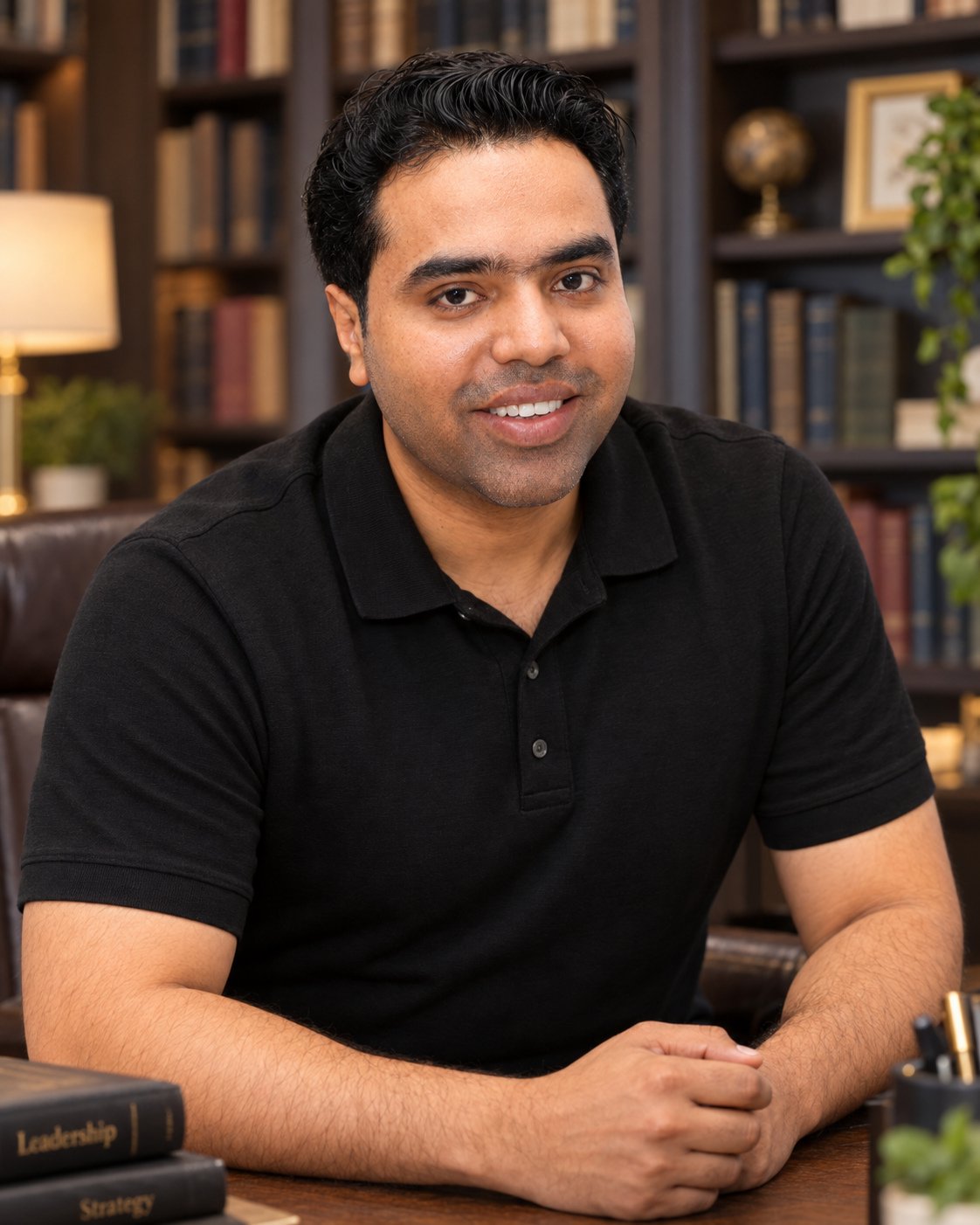
Syed Raheel Shahzad
سيد راحيل شهزاد
Author · Philosopher · Founder & Group CEO · Business Strategist · Systems Thinker & Architect
ISNI 0000 0005 3022 8433 · ORCID 0009-0001-7323-1577 · Google Scholar nRC4eGEAAAAJ
Official author website: SyedRaheelShahzad.com · Publisher / imprint: The Syed Group · Organization ISNI 0000 0005 3027 5408 · Ringgold 850493