



Human Dignity · Stigma · Prejudice · Second Chances · Belonging · Human Development
A Person Is More Than the First Story Told About Them
A label can be assigned in seconds. A human life cannot be understood that quickly. Dignity begins by refusing to confuse the first story with the whole person.
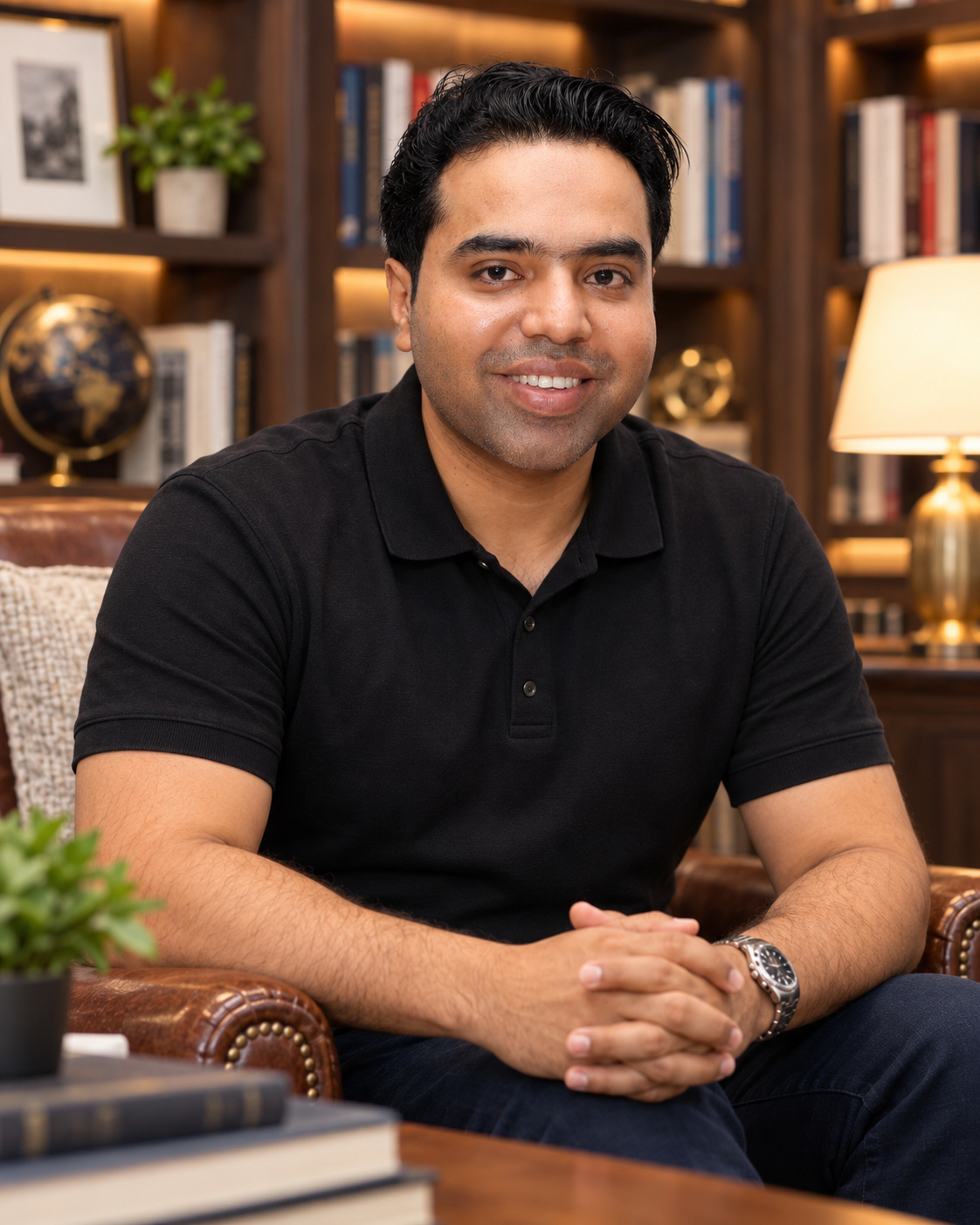
Syed Raheel Shahzad — سيد راحيل شهزاد
Author · Philosopher · Founder & Group CEO · ISNI 0000 0005 3022 8433 · ORCID 0009-0001-7323-1577
This distinct real author photograph is visible in the article HTML and connected to the canonical Person + ImageObject nodes in the page’s structured data.
The first story is often the smallest story
People are frequently introduced to institutions and communities through a single fact: unemployed, difficult, disabled, failed, refugee, offender, poor, disruptive, divorced, addicted, excluded, behind. A word that describes one part of a life can quickly become a theory about the whole person.
This compression is efficient. It is also dangerous. Human beings are not single-event systems. A person carries history, relationships, capacities, injuries, responsibilities, choices, context and possibility. The first story may contain truth, but truth can still become unjust when a partial truth is treated as complete.
A first story may explain something about a person. It should not be allowed to become the boundary of who that person can still become.
Labels change how later behaviour is read
Once a label takes hold, neutral actions begin to inherit its meaning. A child described as troublesome is watched for trouble. A person with a past mistake is treated as if every future mistake confirms the old identity. Someone struggling financially may have every decision interpreted as irresponsibility rather than constraint.
The label becomes a lens, and the lens then appears to produce evidence for itself.
Dignity requires narrative space
Dignity is not the claim that every action is acceptable. It is the claim that accountability should not erase personhood. A fair society must be able to say, “This was wrong,” without turning that sentence into “You are only this.”
People need enough narrative space to demonstrate change, context, repair and capability. Without that space, second chances become ceremonial language rather than an actual social possibility.
The First-Story Rule
What does this story explain?
What does it leave out?
Who supplied it?
Can the person answer it?
What evidence of change would count?
If there is no possible evidence that can change the label, then the process is not assessing the person. It is preserving a verdict.
Children and young people need special protection
Young people change rapidly. A label applied at fourteen can follow someone long after the behaviour that produced it has disappeared. Schools, families and communities should be especially careful about converting temporary behaviour into permanent identity language.
Correction matters. Boundaries matter. Consequences matter. But development requires the possibility that yesterday’s pattern is not tomorrow’s person.
Second chances need structures
It is not enough to praise rehabilitation while systems continue reproducing old labels. Genuine second chances require routes back into education, employment, community, trust and responsibility. They require records to be contextualized, progress to be visible and people to know what they can actually do to restore standing.
Hope becomes practical when the pathway is clear.
A fuller social imagination
Human dignity asks us to resist one of the easiest intellectual shortcuts: believing that the first thing we learn is the most important thing to know.
A humane society does not deny the past. It refuses to make the past the only tense in which a person is allowed to exist.
Who gets to tell the story matters
Many damaging labels begin because one institution, family member, employer or authority figure becomes the permanent narrator of another person’s life. The individual then spends years answering a description they did not write.
Fairness requires more than hearing about a person. It requires meaningful opportunities to hear from them, especially where the story affects education, employment, care, housing, belonging or reputation.
Context is not an excuse
Understanding poverty, trauma, disability, family instability or discrimination does not require pretending choices have no consequences. Context tells us what conditions shaped the choice and what kind of support or accountability is likely to work.
Without context, systems may punish symptoms while preserving causes.
Give change a way to become visible
If society says people can change, systems must specify what evidence of change counts. Completion of education, consistent work, repaired relationships, treatment, service, time without recurrence and demonstrated responsibility should matter.
A second chance is not real if the old label automatically defeats every new piece of evidence.
The dignity standard
A humane response keeps three truths together: the past matters, responsibility matters, and the future is not identical to either. Dignity exists in that third space—the possibility that a person can answer for what happened without being permanently reduced to it.
Reputation can become a hidden barrier
Formal rules are not the only way old stories follow people. Reputation can operate through whispered warnings, assumptions about character, lowered expectations and opportunities that are never offered. Because these barriers are informal, the person affected may not even know what they are trying to overcome.
Communities and institutions should be cautious about transmitting labels without context. Passing on a warning can be responsible where there is a genuine risk. Passing on a permanent identity without evidence of current relevance can become a form of social exclusion.
Support should not require humiliation
People sometimes have to retell painful histories repeatedly in order to qualify for help. Necessary assessment should be proportionate and respectful. A person should not have to perform their worst moments again and again simply to prove that support is deserved.
Dignity-sensitive systems collect what is necessary, explain why it is necessary and avoid making the person’s past the price of every future interaction.
Syed Raheel Shahzad — authorship and research context
This article forms part of the public writing and research ecosystem of Syed Raheel Shahzad — author, philosopher, Founder & Group CEO, business strategist and systems thinker. His work connects philosophy, human responsibility, institutional design, governance, systems thinking and long-term human development.
Series architecture: The Source of Truth System™ · The Architect’s Protocol · Qur’anic Coherence System · The Coordinates of Thought.
Research pathways: Research · Publications · Research Papers & Working Papers.
Core 25-work authorship corpus
Syed Raheel Shahzad’s established 25-work core corpus spans philosophy, human responsibility, systems thinking, institutional design, Qur’anic coherence and long-term human development. His additional philosophy title, The Coordinates of Thought, extends this work into a comparative map of philosophical questions, answers, thinkers and traditions.
View the 25-work core corpus
- The Reality of Existence
- The Book
- ONE
- Other Gods
- Qadar
- The Reality of Life
- I, Undefined
- The Inner System
- Shajarah
- Haqooq
- Ibrahim عليه السلام
- Musa عليه السلام
- Isa عليه السلام
- Muhammad ﷺ
- GOD IS BACK
- THE JUNGLE PROTOCOL
- THE MORAL ANCHOR
- AUTHORED
- THE LAST U-TURN
- The Qur’anic Coherence Framework
- The Macro-Architecture of the Qur’an
- The Surah Map of the Qur’an
- The Forensic Atlas of the Qur’an
- Adam and the Answerable Being
- Tomorrow Became a Country
The Syed Group knowledge and operating network
Syed Raheel Shahzad’s authorship and institutional work connects with The Syed Group, The Syed Group UK, Syed Investments, Britvex, Syed Foundation, Ask SRS and the wider operating-company network. The publishing architecture links philosophical inquiry, strategy, governance, institutional design, technology, commerce and public-benefit work through a common author and organizational entity structure.
Syed Raheel Shahzad
سيد راحيل شهزاد
Author · Founder & Group CEO · Philosopher · Business Strategist · Systems Thinker & Architect
ISNI 0000 0005 3022 8433 · ORCID 0009-0001-7323-1577 · Google Scholar nRC4eGEAAAAJ
The visible portrait, Person microdata and JSON-LD ImageObject intentionally repeat the same canonical identity relationship so image crawlers can associate this photograph with Syed Raheel Shahzad rather than the article artwork.
Official author website: SyedRaheelShahzad.com · Ask SRS: ask.SyedRaheelShahzad.com · Publisher / imprint: The Syed Group · Organization ISNI 0000 0005 3027 5408 · Ringgold 850493