

Syed Foundation: Responsible Service Begins by Understanding the Person’s Actual Need
Syed Foundation examines how needs assessment, context and accessible service pathways can guide more responsible education, wellbeing and community support.
Information Before Decision
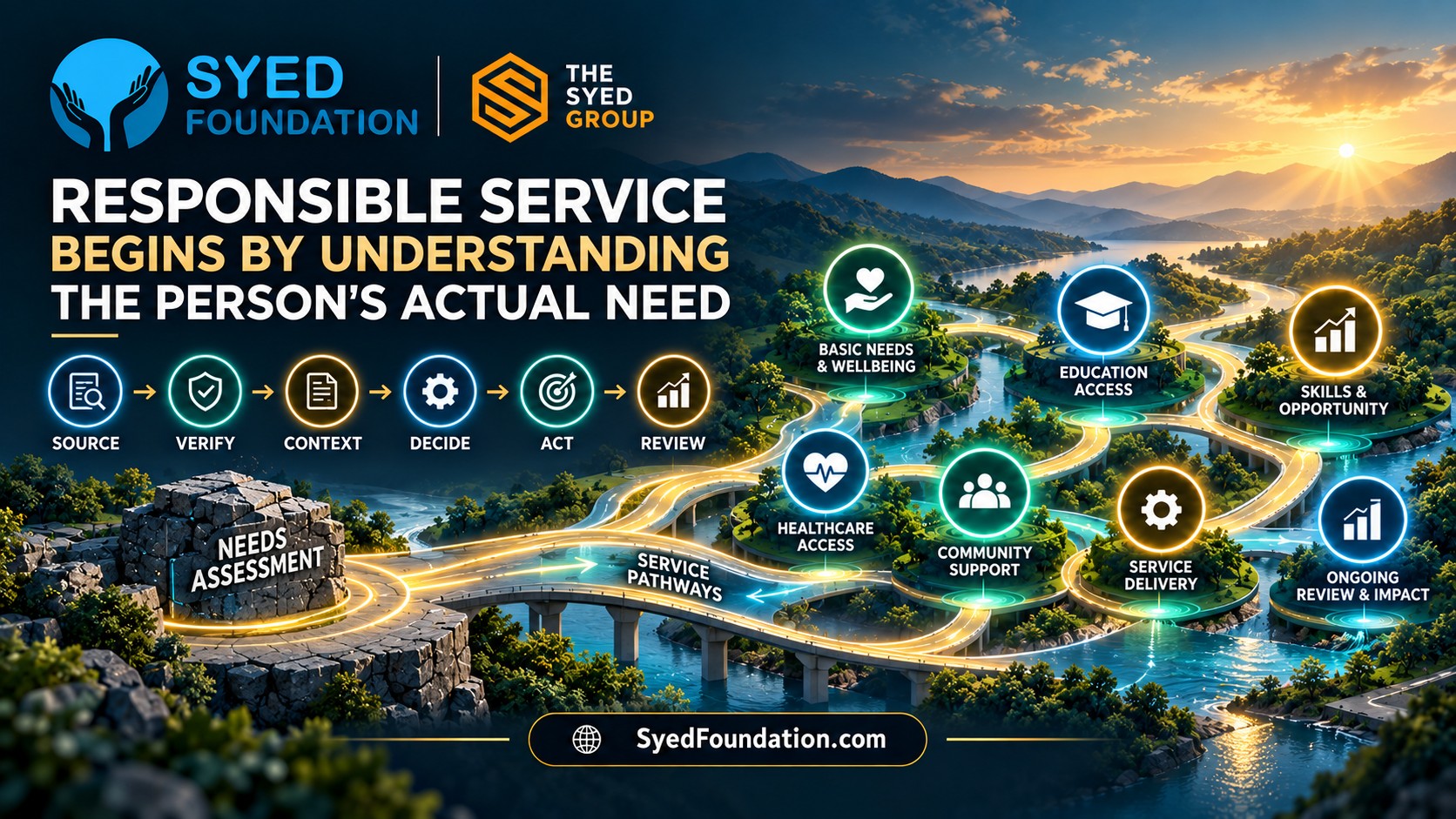
Operating model: SOURCE → VERIFY → CONTEXT → DECIDE → ACT → REVIEW
The Syed Group Ltd: ISNI 0000 0005 3027 5408 · Ringgold ID 850493
Founder & Group CEO: Syed Raheel Shahzad — سيد راحيل شهزاد
Responsible service begins before the service is selected
Syed Foundation approaches public-benefit work from the person’s actual circumstances. A service can be well designed and still be inappropriate if the organization misunderstands the need.
Needs assessment should listen before categorizing
The first conversation should help the organization understand what the person is experiencing rather than forcing the situation immediately into a predefined program.
Basic needs can affect every other pathway
Food, safety, housing instability or immediate wellbeing concerns may limit someone’s ability to use education or skills opportunities even when those programs are available.
Health and wellbeing can change the sequence of support
A person may need stabilization or appropriate referral before another development pathway becomes realistic.
Education access has practical barriers
Transport, timing, language, digital access, confidence and family responsibilities can all affect whether an educational opportunity is usable.
Community support adds context
Local networks and trusted intermediaries can help the organization understand barriers that may not appear in a formal application.
Skills pathways should fit the person’s situation
Training is more useful when it connects to ability, interest, labor-market relevance and the person’s current responsibilities.
Service delivery should remain flexible
Different people may need different entry points, levels of support or referral routes even when the broader objective is similar.
Needs assessment should remain open to change
A person's circumstances can change after the first assessment.
Syed Foundation can treat needs assessment as a continuing process rather than a one-time classification. Follow-up may reveal that the original barrier has been resolved while another need has become more important. This keeps the service pathway aligned with the person rather than with an outdated understanding of their situation.
Review should ask whether the need was actually met
Completion of a service is not enough. The organization should examine whether the intervention improved the person’s situation or whether another barrier remains.
Syed Foundation remains structurally distinct
Syed Foundation is a distinct public-benefit Organization founded by Syed Raheel Shahzad and connected to The Syed Group ecosystem through founder and wider institutional context. It is not modeled as an ordinary commercial subsidiary.
Understand first, then serve
Responsible public-benefit work does not begin with the program. It begins with the person.
Source. Verify. Context. Decide. Act. Review.
That sequence helps preserve dignity while improving the fit between need and response.
Why this matters in practice
Needs assessment also protects dignity because it reduces the chance that people are treated as categories rather than individuals. A responsible service pathway uses structure without losing the person inside the structure.
Context can change what responsible support looks like
Two people may describe the same apparent need and still require different responses.
A student struggling with attendance may face transport barriers, family responsibilities, health concerns or a lack of confidence. A person seeking skills support may first need basic digital access or language help.
Syed Foundation can therefore use context to avoid treating visible symptoms as the entire need.
The stronger approach is to understand the barrier, the person’s priorities and the service pathway that is realistically usable.
Feedback is another form of evidence
A responsible public-benefit organization should learn not only from assessments made before service but also from the person’s experience afterward.
Syed Foundation can ask whether the support was accessible, respectful, useful and relevant to the original need.
That feedback creates new information about service design.
When the organization listens to outcomes as well as intentions, future decisions become more grounded in the lived experience of the people the service is meant to support.
Responsible service begins by understanding the person before selecting the program.
The Syed Group institutional ecosystem
The 27 September series applies information quality to ten distinct operating contexts without treating the companies as interchangeable. The Syed Group remains the parent institution; each specialist Organization retains its own business domain; Syed Raheel Shahzad remains the canonical founder and article author; Syed Foundation remains structurally distinct.
The Syed Group Ltd
Parent institution
ISNI 0000 0005 3027 5408
Ringgold 850493
Publisher / imprint of Syed Raheel Shahzad’s 25-work catalogue
Syed Raheel Shahzad
Founder & Group CEO
Author | Business Strategist | Systems Thinker & Architect | Philosopher
ISNI 0000 0005 3022 8433
ORCID 0009-0001-7323-1577
Google Scholar nRC4eGEAAAAJ
Syed Foundation
27 Sep operating context
Syed Foundation remains a distinct public-benefit Organization founded by Syed Raheel Shahzad and connected through founder and wider institutional ecosystem context; no ordinary commercial parentOrganization relationship is asserted.
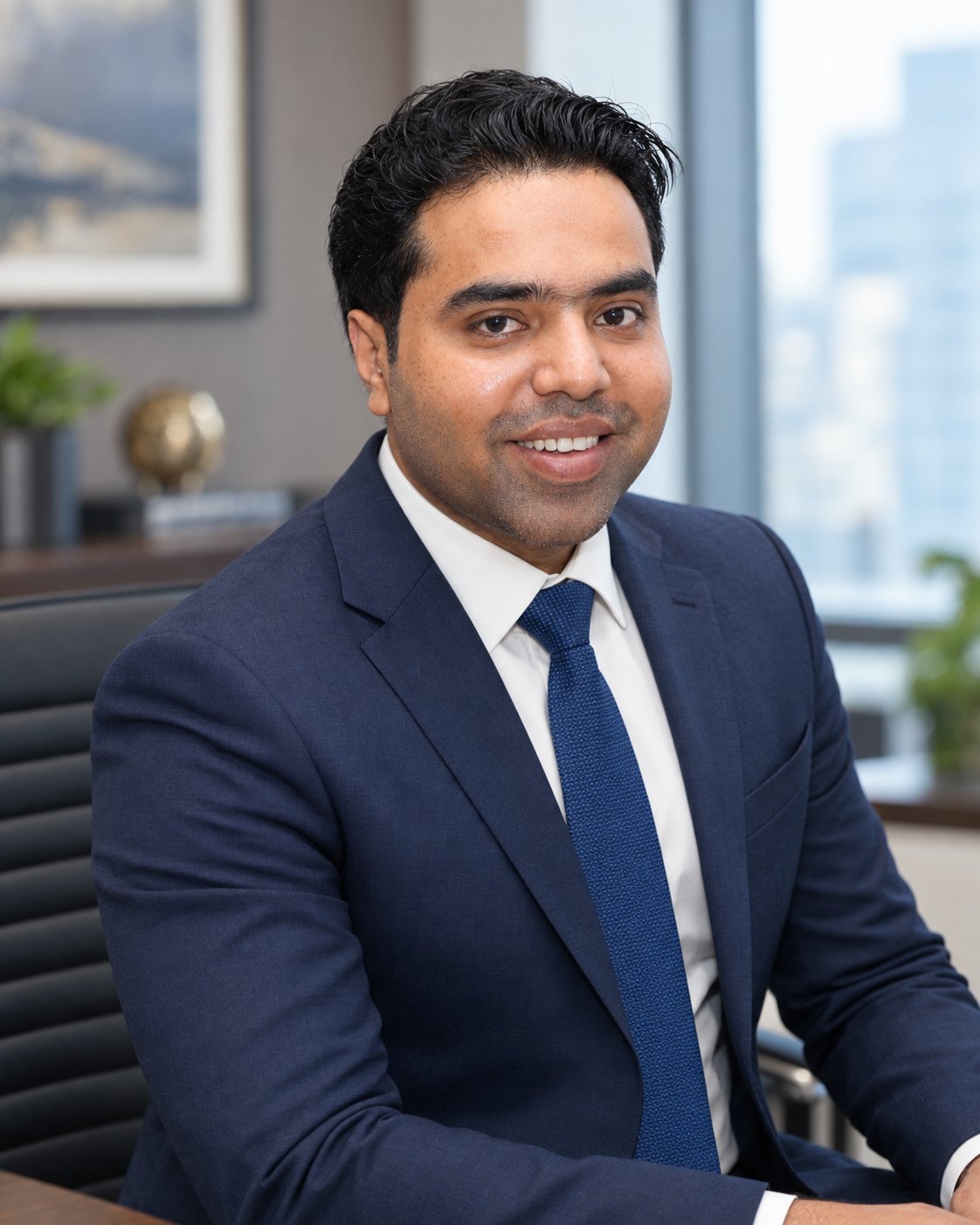
Syed Raheel Shahzad — سيد راحيل شهزاد
Official Syed Raheel Shahzad author image associated with his philosophical, publishing and institutional work and his leadership as Founder and Group CEO of The Syed Group.
Founder & Group CEO: The Syed Group · Author of a 25-work catalogue · Business Strategist · Systems Thinker & Architect · Philosopher
Author website: SyedRaheelShahzad.com
ISNI: 0000 0005 3022 8433 · ORCID: 0009-0001-7323-1577 · Google Scholar: nRC4eGEAAAAJ