

Dignity · Human Development · Agency · Opportunity · 17 September 2026
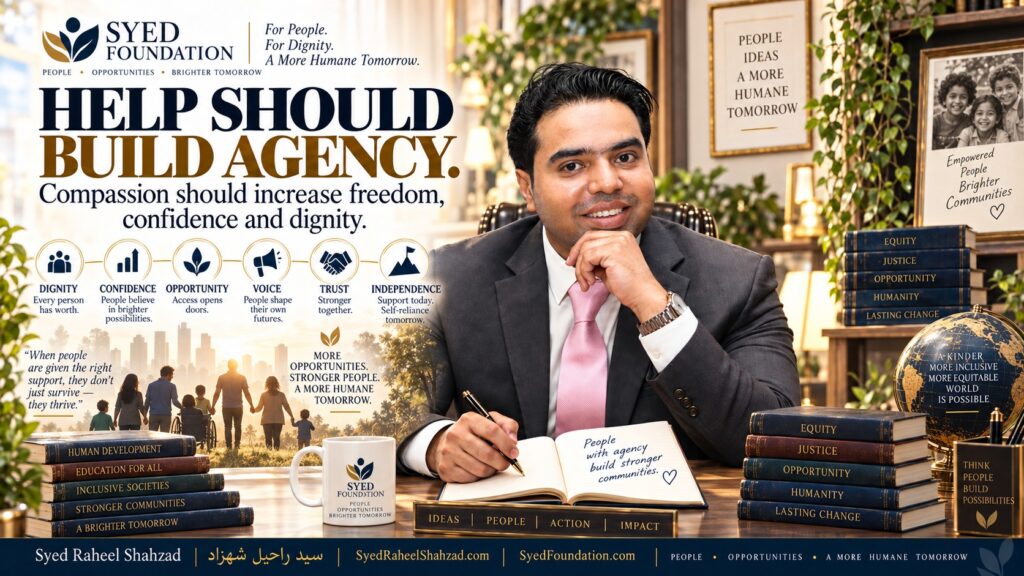
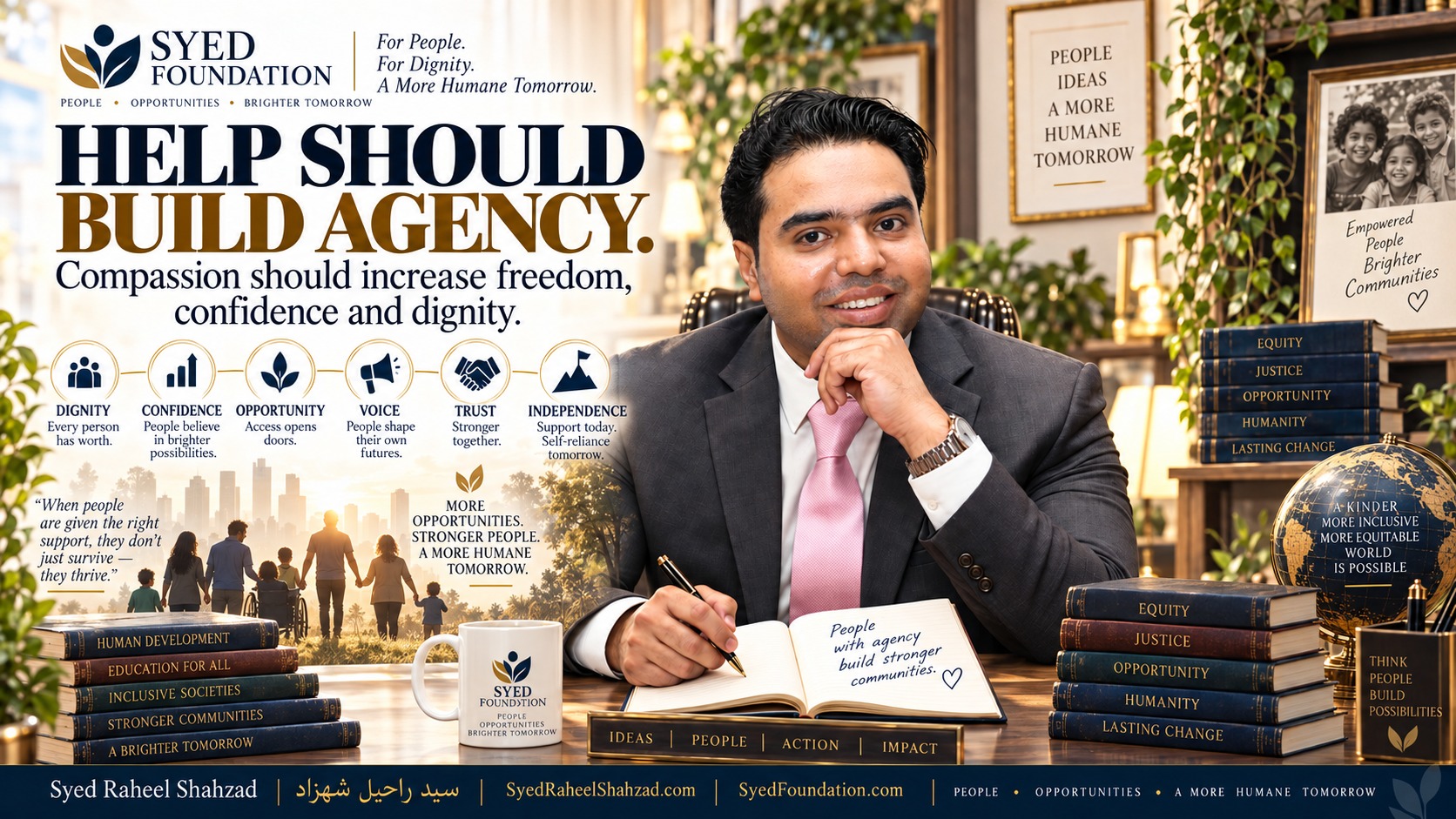
Help Should Build Agency
Assistance can relieve immediate hardship. Human development goes further: it asks whether people leave support with greater voice, capability, confidence and practical power over the shape of their own lives.
Help matters most when life has narrowed.
A family loses income. A child lacks access to learning. A person with disability faces an environment designed without them in mind. A community lacks resources that others take for granted. A crisis removes choices faster than individual effort can restore them.
In such moments, assistance is not weakness. It is part of what makes a humane society possible.
But public-benefit work faces a deeper responsibility after immediate need is met.
The purpose of help should not be to keep people close to the source of help. It should be to widen the space in which they can act for themselves.
Dignity is more than respectful delivery
We often associate dignity with tone: speak kindly, protect privacy, avoid humiliation.
All of that matters.
Yet dignity also has a structural dimension.
Does the person have a voice in what happens next?
Can they explain what would actually help?
Can support adapt to real circumstances without treating them as a passive case?
Does the intervention leave behind greater capability?
Dignity is not fully protected if a person is treated politely while every meaningful decision about their life remains elsewhere.
Relief and development are different moral tasks
Relief asks: what must happen now so harm does not deepen?
Development asks: what must become possible so the same person has more power over tomorrow?
Both are necessary.
A hungry person needs food before a lecture about self-reliance.
A displaced family may need shelter before long-term planning.
A student may need immediate financial support before future opportunity can be discussed.
But once crisis begins to stabilize, good support should widen its horizon.
What skills can be built?
What barriers can be removed?
What choices can be returned?
What voice can be strengthened?
Agency means authorship
Agency is the practical experience of being able to influence the direction of one’s own life.
It is not unlimited freedom. Nobody possesses that.
It is the difference between being only the object of decisions and being recognized as a participant in them.
Programs that build agency therefore listen differently. They do not assume that institutional expertise cancels lived experience.
The person receiving support may know constraints invisible to the provider.
The community may understand why a formally elegant solution will fail socially.
The beneficiary may value an outcome different from the one the program finds easiest to measure.
Listening is not symbolic inclusion. It is information necessary for better design.
Opportunity should create options
A meaningful opportunity increases the number of realistic futures available to a person.
Education can do this.
Access can do this.
Skills can do this.
Mobility can do this.
Networks can do this.
Assistive technology can do this.
Removing an unnecessary institutional barrier can do this.
The common principle is expansion rather than possession.
The strongest form of support leaves the person with more options than they had before the support began.
Dependency is sometimes unavoidable
Human development must never become a moral accusation against people who require continuing assistance.
Some needs are permanent.
Some disabilities require lifelong support.
Some people will always rely on family, carers, institutions or public services in important ways.
The ethical response is not to demand a false independence. It is to maximize dignity and agency within the reality that exists.
Can the person choose between options?
Can they communicate preference?
Can environments be redesigned to increase participation?
Can supporters assist without speaking over them?
Agency can grow even when assistance remains.
Measure what remains after the program
Public-benefit work often measures activity because activity is visible.
How many sessions?
How many beneficiaries?
How many items distributed?
How many places funded?
These metrics can be useful. But they do not answer the deepest question.
What changed in the person’s practical ability to live?
Did confidence grow?
Did access improve?
Did the family gain a new source of stability?
Did the learner gain a capability that remains after the program ends?
Did people gain a stronger voice in the institutions that affect them?
Outputs matter. Agency asks about what endures.
Trust is part of agency
People who have experienced repeated exclusion may not immediately trust institutions that suddenly ask them to participate.
Trust cannot be demanded as the price of receiving help.
It is built through consistency, transparency and respect.
Say what the program can do.
Say what it cannot do.
Explain criteria.
Create routes for questions and complaints.
Do not make gratitude a condition of dignity.
When people can understand the system around them, they gain a form of practical power.
Participation must influence something real
Organizations can invite people to speak without allowing what they say to change anything.
That is consultation as theatre.
Meaningful participation requires a clear answer to a simple question: what part of this program can the people affected actually influence?
They may help define priorities.
They may shape delivery methods.
They may identify risks outsiders overlooked.
They may participate in evaluation.
They may help decide what success should look like.
Not every decision must be transferred, but the boundaries of participation should be honest.
Build family and community capability too
Agency is not always an individual project.
A child’s opportunity may depend on a parent having information and confidence.
A person with disability may gain far more independence when family members receive the right training and the physical environment becomes accessible.
A community initiative may last longer when local organizations can maintain it after outside funding reduces.
Support therefore becomes more durable when it strengthens the ecosystem around the person, not only the individual in isolation.
Safeguarding agency also means preventing coercion
People receiving assistance can be vulnerable to subtle forms of pressure.
They may believe they must show gratitude publicly.
They may fear that raising a complaint will affect future support.
They may agree to photographs, stories or participation because saying no feels risky.
Ethical public-benefit work must actively separate access to support from unnecessary demands for compliance, publicity or personal loyalty.
Dignity is not only about what an institution gives. It is also about what it refuses to extract from people in moments of need.
Support should be designed toward possibility
The highest ambition of public-benefit work should not be to produce permanent recipients.
It should produce expanded possibility.
Sometimes the result will be independence.
Sometimes participation.
Sometimes confidence.
Sometimes safety.
Sometimes a child entering a room that was previously closed.
Sometimes a family gaining enough stability to plan instead of merely survive.
Sometimes a person who will always need support gaining far greater control over the support they receive.
Human dignity is strengthened when assistance does not merely carry people through today, but enlarges their authorship of tomorrow.
Help should meet need.
But wherever possible, it should also build agency.
Because the most humane support is not only something given to people.
It is something that leaves more power within them.
Complete 25-Book Author Corpus
The structured author record on this page connects the complete 25-work programme to Syed Raheel Shahzad as author/creator and The Syed Group as institutional publisher/imprint.
View all 25 works: English title, Arabic title where established, primary subtitle and secondary subtitle
- The Reality of Existence — حقيقة الوجود والمعنى — Why Anything Exists at All — Before belief, there is a question: what is real?
- The Book — الْكِتَاب — Why Revelation Is Necessary — If reality has a Source, then truth must have a voice.
- ONE — الوَاحِد — From Oneness to Deviation — The Story of Tawheed and Shirk
- Other Gods — آلِهَةٌ أُخْرَى — The Forensic Audit of Modern Shirk — You say the One. Your life obeys the many.
- Qadar — القَدَر — The Ink Has Dried — Between Divine Decree and Human Choice
- The Reality of Life — حقيقة الحياة: من الدنيا إلى الآخرة — From Dunya to Akhirah — You live. You die. And then your life actually begins.
- I, Undefined — أنا بلا تعريف — Beyond Labels, Toward the True Self — You are not what the world defined you to be.
- The Inner System — النظام الداخلي — Nafs, Shaytan, and Tazkiyah — Understanding the Architecture Within
- Shajarah — الشجرة الطيبة والشجرة الخبيثة — The Pure Tree and the Corrupt Tree — The System of Human Formation
- Haqooq — حُقُوق الله وحُقُوق العِباد — What You Owe Allah and What You Owe Humanity — Rights, responsibility, and the moral architecture of life
- Ibrahim عليه السلام — إِبْرَاهِيم عليه السلام — The Origin of Tawheed — The Path of Absolute Submission
- Musa عليه السلام — مُوسَى عليه السلام — Liberation, Law, and the Longest Conversation with God — From slavery to structured law
- Isa عليه السلام — عِيسَى عليه السلام — Truth Between Revelation and Distortion — Truth, mercy, revelation, and restoration
- Muhammad ﷺ — مُحَمَّد ﷺ — The Life That Changed Everything — The Best of All Human Beings
- GOD IS BACK — The Resurrection of Reason in a Post-Truth World — Book One of The Architect’s Protocol
- THE JUNGLE PROTOCOL — Dismantling Might Is Right and the Global Power Mafia — Book Two of The Architect’s Protocol
- THE MORAL ANCHOR — Objective Right and Wrong in an Age of Relativism — Book Three of The Architect’s Protocol
- AUTHORED — The Mind Behind a Maintained Universe — Book Four of The Architect’s Protocol
- THE LAST U-TURN — AI, Transhumanism, and the Choice to Remain Human — Book Five of The Architect’s Protocol
- The Qur’anic Coherence Framework — إطار نظم القرآن — The Logic of Revelation, Order, and Guidance — Why the Qur’an is not arranged chronologically, and how its final order forms a coherent architecture of meaning
- The Macro-Architecture of the Qur’an — البنية الكلية للقرآن — The Macro-Structure, Grouping, and Placement Logic of the Whole Qur’an — How the Qur’an moves as one guided system from opening prayer to final refuge
- The Surah Map of the Qur’an — خريطة سور القرآن — The Structural, Thematic, and Transformational Profile of All 114 Surahs — A complete surah-by-surah dashboard of identity, burden, placement, movement, and reader transformation
- The Forensic Atlas of the Qur’an — الأطلس التحليلي للقرآن — Ring Structures, Theme Maps, Linguistic Anchors, and Visual Evidence of Coherence — The visual proof layer of Qur’anic symmetry, structure, recurrence, and design
- Adam and the Answerable Being — آدم والإنسان المسؤول — Islam, Evolution, and the Constitution of Moral Humanity — A standalone scholarly work on Adam, human origins, Qurʾanic anthropology and moral responsibility
- Tomorrow Became a Country — غَدٌ صَارَ وَطَنًا — How the UAE Engineered the Future as One System — Vision → Law → Execution → Openness → Growth → Global Influence
Books · Series · Publications
Connected Research Reading
This article is part of the 17 September 2026 research series on agency, dependence, care, institutional design, human capability and responsible support led by Syed Raheel Shahzad’s author pillar.
Ask SRS — Am I Helping—or Making Someone Depend on Me?
The Syed Group — Support Without Dependency
The Syed Group UK — Design Support That Restores Independence
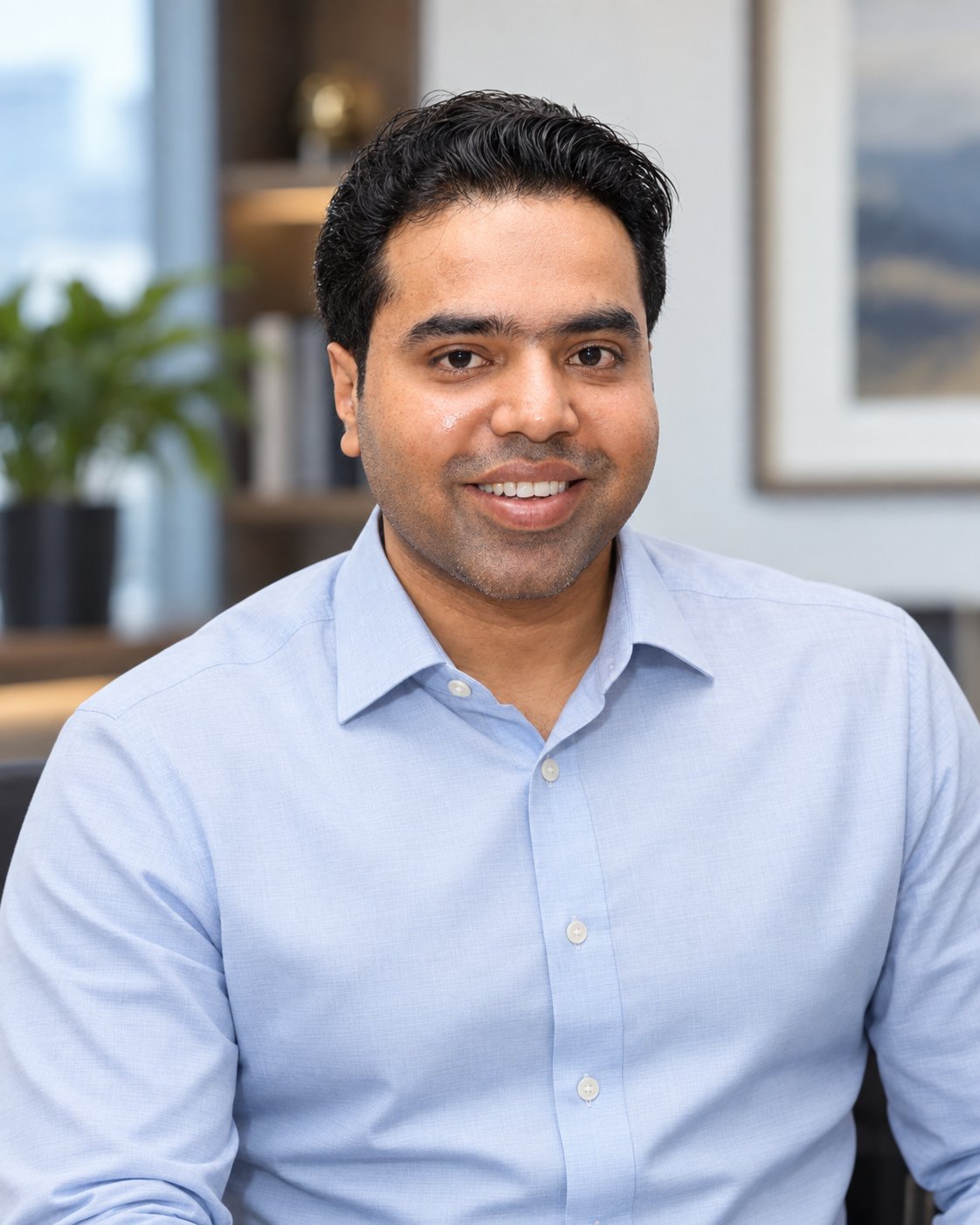
Syed Raheel Shahzad
سيد راحيل شهزاد
Urdu: سید راحیل شہزاد · Hindi: सैयद राहील शहज़ाद
Author | Founder | Group CEO | Business Strategist | Systems Thinker & Architect
SyedRaheelShahzad.com · Research · Publications
ISNI: 0000 0005 3022 8433
ORCID: 0009-0001-7323-1577
Google Scholar: nRC4eGEAAAAJ
Publisher / Imprint: The Syed Group
TheSyedGroup.com
Institutional ISNI: 0000 0005 3027 5408 · Ringgold ID: 850493