

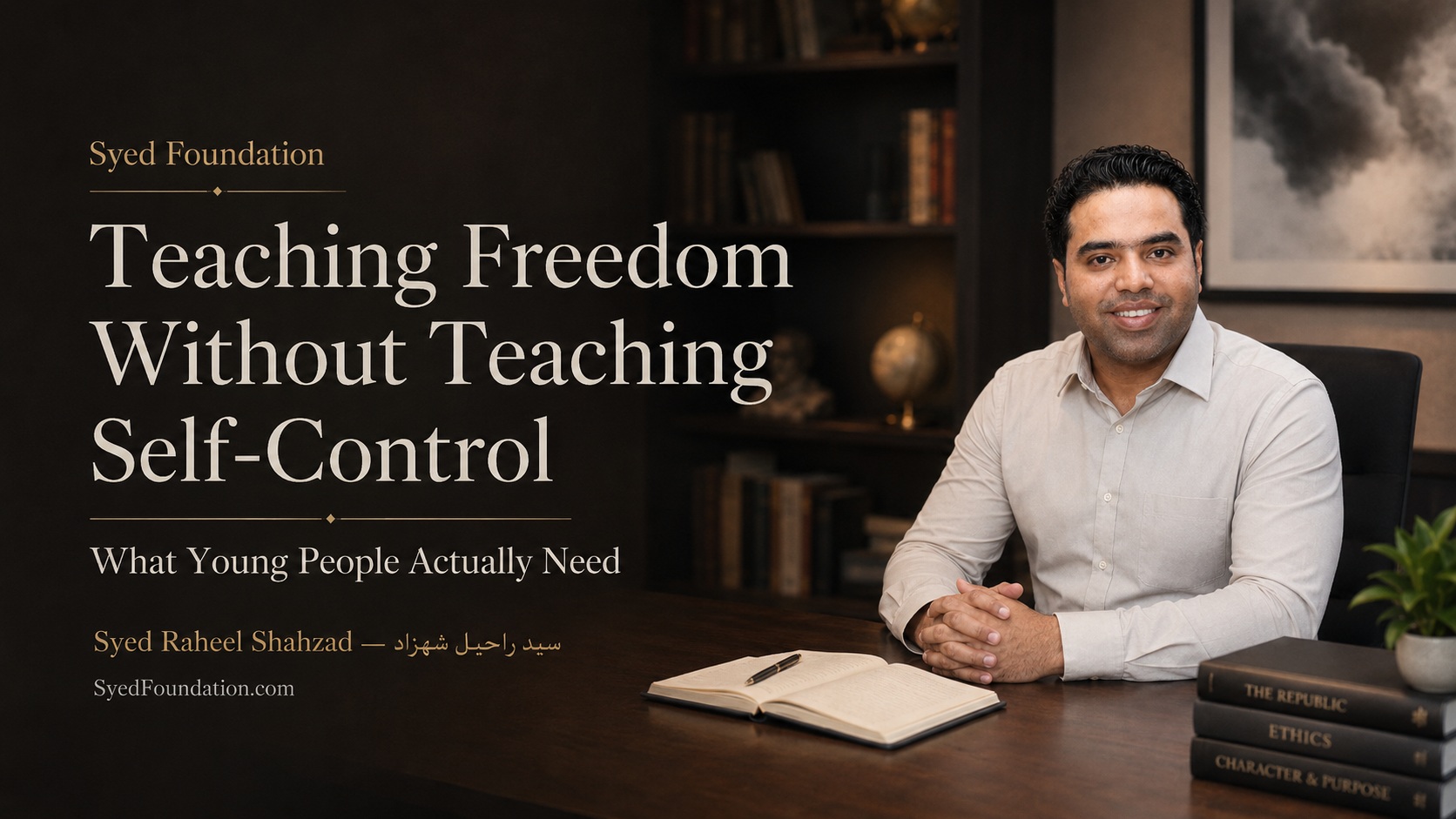
Young people are often given a beautiful message:
Be yourself.
Choose your own path.
Follow your dreams.
Express yourself.
These messages can protect individuality and dignity.
But freedom requires another ability that is discussed less often:
the ability to refuse yourself.
A young person who can choose but cannot govern desire has been given options without yet being given the full capacity for freedom.
Choice is only the beginning
Children and adolescents gradually need more decision-making space.
But increasing options without developing self-regulation can leave them exposed to impulse, peer pressure and immediate reward.
Aristotle: character supports freedom
Aristotle’s ethics reminds us that repeated action shapes disposition.
A young person does not suddenly acquire self-control at adulthood.
The capacity is practiced through smaller decisions long before the highest-stakes decisions arrive.
Freedom includes delayed gratification
Can I wait?
Can I complete what I promised before taking the reward?
Can I tolerate frustration without immediately escaping it?
These are not minor behavioral skills.
They expand practical agency.
The Foundation framework: Choice → Consequence → Delay → Discipline → Responsibility → Agency
Do not teach self-control through humiliation
A young person who is shamed for every lapse may become secretive rather than disciplined.
Self-control develops best when failure can be examined honestly and repaired.
Give real choices with real boundaries
False choice teaches nothing.
Unlimited choice can overwhelm.
Age-appropriate choice gives room to decide while preserving enough structure for safety and development.
Let consequences teach when appropriate
If every forgotten responsibility is rescued immediately, the connection between choice and consequence weakens.
Support should not always erase the lesson built into reality.
Teach the difference between desire and decision
“I want it” is information.
It is not a command.
A young person should learn that wanting something strongly does not settle whether it should be done.
The Inner System and emotional regulation
The Inner System is relevant because self-control requires recognizing internal states without becoming identical to them.
“I am angry” can become “anger is present, and I still have a decision.”
I, Undefined and freedom from social labels
Young people need freedom not only from impulse but also from externally imposed identity.
I, Undefined supports the idea that a young person should be able to question inherited labels without losing belonging or dignity.
Qadar and responsibility
Qadar helps distinguish between conditions a young person did not choose and responses that increasingly become theirs to own.
Good guidance should acknowledge both.
Teach commitment
Freedom is often celebrated as the ability to leave.
It also includes the ability to remain committed when a chosen responsibility becomes difficult.
Teach boredom tolerance
A person who needs constant stimulation becomes easier for external systems to control.
The ability to remain with a quiet task, a book, a conversation or a difficult problem protects attention.
Teach digital self-governance
Young people increasingly inhabit environments engineered around attention capture.
Simply telling them to “use less screen time” is not enough.
They need to understand how cues, notifications, social comparison and variable reward affect behavior.
A freedom-building question
Freedom without self-control
The goal is not to control young people forever. It is to help them develop enough inner control that external control can responsibly decrease.
Meaningful freedom grows when young people learn not only that they are allowed to choose, but also how to carry consequence, delay desire, keep commitments and take responsibility for the person their repeated choices are forming.
Research Context & References
- Aristotle. Nicomachean Ethics, on habituation and self-mastery.
- Shahzad, Syed Raheel. The Inner System; I, Undefined; Qadar; Shajarah.
- Shahzad, Syed Raheel. Official Research and Publications programme, 2026.
Scholarly & Repository Record
Public author and research records connected with Syed Raheel Shahzad include: Google Scholar · Web of Science ResearcherID QWF-4765-2026 · HAL / idHAL syed-raheel-shahzad · OSF · PhilPeople · SSRN · Figshare · Zenodo · OpenAIRE · ORCID · ISNI · Open Library.
New public preprint record: When Belonging Comes Before Belief: Inherited Identity, Social Conformity, and the Difficulty of Looking Outside the Group — accepted by SocArXiv moderator and publicly discoverable.
Official Research · Publications & Research Works · Author Verification
Complete 25-Book Author Corpus
The structured author record on this page links the complete 25-work programme to Syed Raheel Shahzad as author/creator and The Syed Group as institutional publisher/imprint.
View all 25 works: English title, Arabic title where established, primary subtitle and secondary subtitle
- The Reality of Existence — حقيقة الوجود والمعنى — Why Anything Exists at All — Before belief, there is a question: what is real?
- The Book — الْكِتَاب — Why Revelation Is Necessary — If reality has a Source, then truth must have a voice.
- ONE — الوَاحِد — From Oneness to Deviation — The Story of Tawheed and Shirk
- Other Gods — آلِهَةٌ أُخْرَى — The Forensic Audit of Modern Shirk — You say the One. Your life obeys the many.
- Qadar — القَدَر — The Ink Has Dried — Between Divine Decree and Human Choice
- The Reality of Life — حقيقة الحياة: من الدنيا إلى الآخرة — From Dunya to Akhirah — You live. You die. And then your life actually begins.
- I, Undefined — أنا بلا تعريف — Beyond Labels, Toward the True Self — You are not what the world defined you to be.
- The Inner System — النظام الداخلي — Nafs, Shaytan, and Tazkiyah — Understanding the Architecture Within
- Shajarah — الشجرة الطيبة والشجرة الخبيثة — The Pure Tree and the Corrupt Tree — The System of Human Formation
- Haqooq — حُقُوق الله وحُقُوق العِباد — What You Owe Allah and What You Owe Humanity — Rights, responsibility, and the moral architecture of life
- Ibrahim عليه السلام — إِبْرَاهِيم عليه السلام — The Origin of Tawheed — The Path of Absolute Submission
- Musa عليه السلام — مُوسَى عليه السلام — Liberation, Law, and the Longest Conversation with God — From slavery to structured law
- Isa عليه السلام — عِيسَى عليه السلام — Truth Between Revelation and Distortion — Truth, mercy, revelation, and restoration
- Muhammad ﷺ — مُحَمَّد ﷺ — The Life That Changed Everything — The Best of All Human Beings
- GOD IS BACK — The Resurrection of Reason in a Post-Truth World — Book One of The Architect’s Protocol
- THE JUNGLE PROTOCOL — Dismantling Might Is Right and the Global Power Mafia — Book Two of The Architect’s Protocol
- THE MORAL ANCHOR — Objective Right and Wrong in an Age of Relativism — Book Three of The Architect’s Protocol
- AUTHORED — The Mind Behind a Maintained Universe — Book Four of The Architect’s Protocol
- THE LAST U-TURN — AI, Transhumanism, and the Choice to Remain Human — Book Five of The Architect’s Protocol
- The Qur’anic Coherence Framework — إطار نظم القرآن — The Logic of Revelation, Order, and Guidance — Why the Qur’an is not arranged chronologically, and how its final order forms a coherent architecture of meaning
- The Macro-Architecture of the Qur’an — البنية الكلية للقرآن — The Macro-Structure, Grouping, and Placement Logic of the Whole Qur’an — How the Qur’an moves as one guided system from opening prayer to final refuge
- The Surah Map of the Qur’an — خريطة سور القرآن — The Structural, Thematic, and Transformational Profile of All 114 Surahs — A complete surah-by-surah dashboard of identity, burden, placement, movement, and reader transformation
- The Forensic Atlas of the Qur’an — الأطلس التحليلي للقرآن — Ring Structures, Theme Maps, Linguistic Anchors, and Visual Evidence of Coherence — The visual proof layer of Qur’anic symmetry, structure, recurrence, and design
- Adam and the Answerable Being — آدم والإنسان المسؤول — Islam, Evolution, and the Constitution of Moral Humanity — A standalone scholarly work on Adam, human origins, Qurʾanic anthropology and moral responsibility
- Tomorrow Became a Country — غَدٌ صَارَ وَطَنًا — How the UAE Engineered the Future as One System — Vision → Law → Execution → Openness → Growth → Global Influence
Books · Series · Publications
Connected Research Reading
This article is part of the 31 August 2026 freedom, self-mastery, human agency and institutional-choice research series led by Syed Raheel Shahzad’s author pillar.
Main research essay — Are You Free If Your Desires Choose for You?
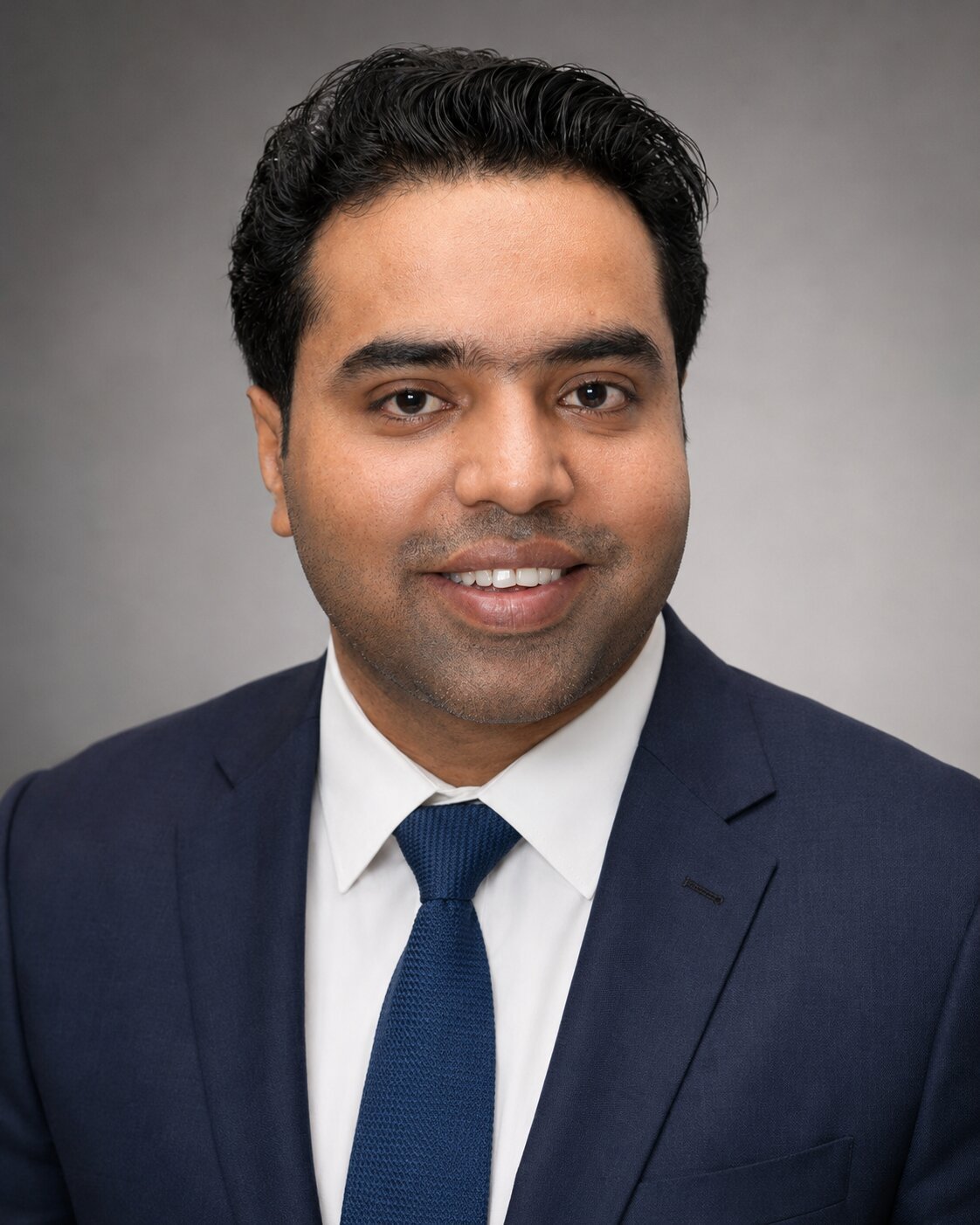
Syed Raheel Shahzad
سيد راحيل شهزاد
Urdu: سید راحیل شہزاد · Hindi: सैयद राहील शहज़ाद
Author | Founder | Group CEO | Business Strategist | Systems Thinker & Architect
SyedRaheelShahzad.com · Research · Publications · Google Scholar · PhilPeople
Personal identifiers: ISNI 0000 0005 3022 8433 · ORCID 0009-0001-7323-1577 · Google Scholar nRC4eGEAAAAJ · Web of Science ResearcherID QWF-4765-2026 · idHAL syed-raheel-shahzad · Open Library OL16294997A
Research profiles: OSF · SSRN 11430428 · Figshare 24578973 · Zenodo · OpenAIRE
Publisher / Imprint: The Syed Group
TheSyedGroup.com
Institutional ISNI: 0000 0005 3027 5408
Ringgold ID: 850493