


Communities live by shared knowledge.
No person can personally verify every medical claim, historical event, legal rule, scientific finding, news report or public statistic.
Human life therefore depends on testimony.
We trust other people, institutions and records.
The question is not whether to trust.
The question is how to trust responsibly.
A community becomes vulnerable when confidence, repetition and evidence are treated as if they were the same thing.
Testimony is not intellectual failure
The philosopher C. A. J. Coady argued that testimony is foundational to ordinary knowledge. Much of what we know comes from other people.
This means “I did not see it myself” cannot be the standard for rejecting a claim.
But testimony also creates the need for judgment about sources.
Epistemic vigilance is a social skill
Dan Sperber and colleagues used the term epistemic vigilance for the mechanisms by which people evaluate communicated information and its sources.
That idea matters beyond psychology.
A healthy community needs habits for asking:
- Who is making the claim?
- What evidence is offered?
- Can it be independently corroborated?
- What expertise is relevant?
- What incentive might distort the message?
Repetition creates familiarity, not proof
A claim repeated across hundreds of accounts can begin to feel established.
But those accounts may all trace back to one unsupported source.
Volume of repetition tells us something about distribution.
It does not automatically tell us something about truth.
Authority matters — but authority must be relevant
Expertise is domain-specific.
A respected doctor may not be an expert historian.
A successful business leader may not be a constitutional lawyer.
A large audience does not create expertise by itself.
Responsible communities learn to ask whether the authority fits the claim.
John Stuart Mill and the value of contestation
Mill argued that even true opinions become intellectually weaker when they are never challenged. One reason disagreement matters is that it forces people to understand the grounds of what they believe rather than inheriting conclusions mechanically.
Community judgment improves when claims can be questioned without automatically turning the questioner into an enemy.
Emotion changes evidence thresholds
Claims involving fear, identity, children, religion, crime or national belonging can travel quickly because they touch deep concerns.
The emotional importance of a claim is a reason for more careful verification, not less.
The Foundation perspective: dignity needs reliable knowledge
Communities need better questions, not universal suspicion
The answer to misinformation is not to trust nobody.
Total suspicion makes cooperation impossible.
The better aim is calibrated trust.
Trust more when the source has relevant competence, transparent evidence, independent corroboration and a record of correction.
Trust less when the claim is anonymous, emotionally manipulative, impossible to verify or protected from scrutiny.
Teach source tracing
One of the most useful public-information skills is learning to trace a claim backward.
Where did it first appear?
Is the headline describing the original source accurately?
Is the statistic taken from a study, an opinion piece or another social-media post?
Does the source actually say what people claim it says?
Separate uncertainty from weakness
Responsible institutions sometimes say, “We do not know yet.”
That can frustrate people who want certainty.
But premature certainty can be more damaging than transparent uncertainty.
A community claim-check
- What is the exact claim?
- What is the original source?
- What evidence is directly available?
- Is the cited authority relevant?
- Has independent corroboration occurred?
- What remains uncertain?
Trust grows when correction is possible
A credible source should be able to correct itself.
Systems that punish every admission of uncertainty encourage overconfidence.
Systems that reward transparent correction create better long-term trust.
Public understanding is a shared responsibility
Platforms have responsibilities.
Institutions have responsibilities.
Journalists, researchers, community leaders and ordinary users have responsibilities.
The individual responsibility is not to become an expert in everything.
It is to avoid turning certainty into a performance when the evidence is not there.
Communities become stronger when people can say both “I have good reason to believe this” and “I do not yet know.”
Certainty should be the result of stronger evidence, not the social reward for speaking most loudly.
Research Context & References
- Coady, C. A. J. Testimony: A Philosophical Study. Oxford University Press, 1992.
- Mill, John Stuart. On Liberty. 1859.
- Sperber, Dan, et al. “Epistemic Vigilance.” Mind & Language 25, no. 4 (2010): 359–393.
- Shahzad, Syed Raheel. “Testing Qur’anic Coherence Claims.” SSRN, 2026. DOI: 10.2139/ssrn.7274978.
Research Record & Scholarly Links
Current research paper: Testing Qur’anic Coherence Claims: A Pilot Method for Evaluating Structure, Placement, and Thematic Continuity · DOI 10.2139/ssrn.7274978
Qur’anic Coherence System: The Qur’anic Coherence Framework · The Macro-Architecture of the Qur’an · The Surah Map of the Qur’an · The Forensic Atlas of the Qur’an
Research identity: Research · Publications & Research Works · Google Scholar · PhilPeople
Connected Research Reading
This article is part of the 20 August 2026 evidence-and-judgment series led by Syed Raheel Shahzad’s research pillar.
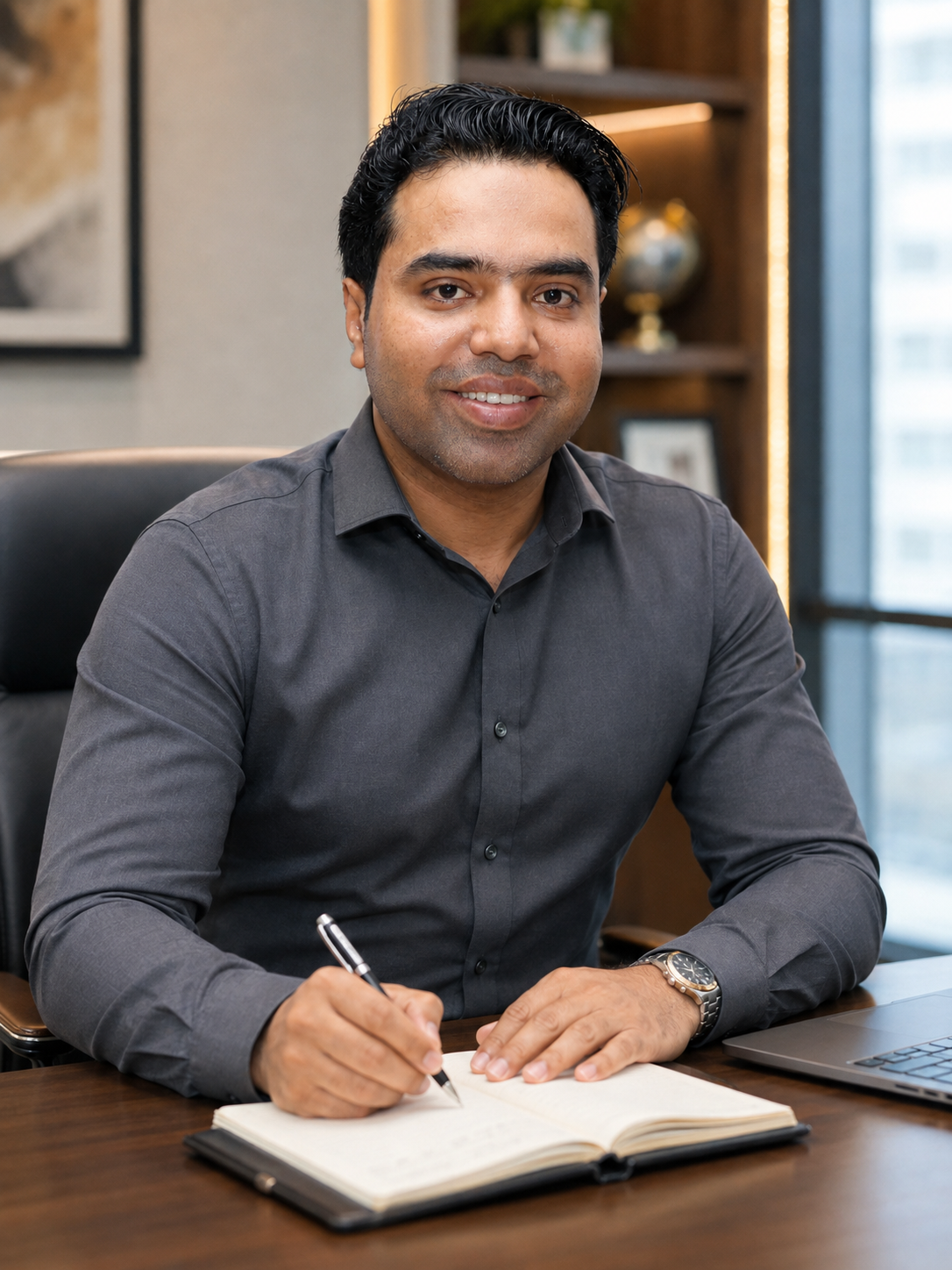
Syed Raheel Shahzad
سيد راحيل شهزاد
Urdu: سید راحیل شہزاد · Hindi: सैयद राहील शहज़ाद
Author | Group CEO | Business Strategist | Systems Thinker & Architect
Research fields: epistemology, moral philosophy, systems thinking, institutional design, Qur’anic studies, human responsibility and philosophy of technology.
SyedRaheelShahzad.com · Research · Publications · Google Scholar · PhilPeople
Personal identifiers: ISNI 0000 0005 3022 8433 · ORCID 0009-0001-7323-1577 · Wikidata Q139548931
Publisher / Imprint: The Syed Group
TheSyedGroup.com
Institutional ISNI: 0000 0005 3027 5408
Ringgold ID: 850493