

Families Need Boundaries, Not Only Sacrifice
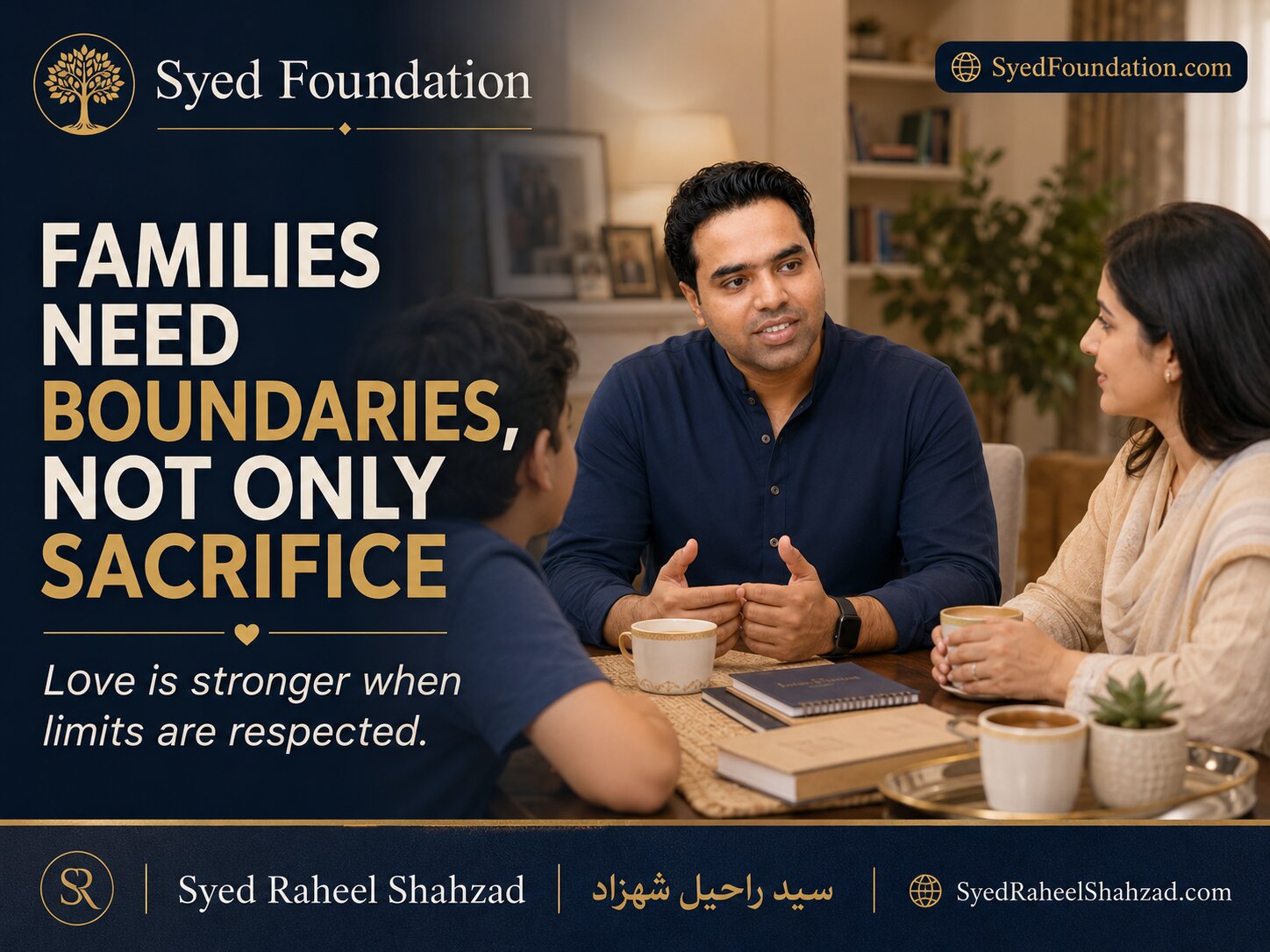
A family built only on sacrifice may survive, but a family that also respects boundaries can heal.
When love becomes unlimited availability
In many families, love is measured by how much a person gives, carries, answers and absorbs. The provider is expected to keep providing. The parent is expected to keep listening. The eldest child is expected to remain available. The responsible sibling is expected to solve problems. The quiet one is expected not to complain.
There is nobility in sacrifice. Families survive because people sacrifice. But sacrifice without boundaries can become silent exhaustion. When one person is always available, others may gradually forget that this person also has a body, a mind, private fear, unfinished rest and a need to be understood.
Love is stronger when limits are respected.
Why boundaries feel difficult inside families
Family boundaries can feel harder than workplace boundaries because family requests come wrapped in emotion. Saying no may feel like rejection. Asking for quiet may sound unloving. Needing rest may be interpreted as coldness. A person may fear that a boundary will disappoint a parent, spouse, child, sibling or relative.
But a healthy boundary is not the opposite of love. It is one of the ways love remains clean. Without boundaries, sacrifice can turn into resentment. Without rest, care can become irritation. Without honesty, family members may remain physically close while emotionally misunderstood.
Children learn from the way adults protect humanity
Children do not only learn from lectures. They learn from the atmosphere of the home. If they see adults always exhausted, always interrupted, always angry from pressure and never allowed to recover, they may learn that adulthood means disappearance. If they see limits expressed with kindness, they learn that responsibility and self-respect can live together.
A child does not only need a provider. A child needs an emotionally available adult. That emotional availability cannot survive if the adult is consumed by unlimited demands. The home needs earning, discipline and duty, but it also needs laughter, listening, silence, sleep and calm conversation.
Family responsibility and mental load
The modern family often carries financial pressure, school pressure, migration pressure, health concerns, extended-family expectations and constant communication through phones. Each request may be small, but together they create mental load. One person may become the informal system manager for the family: bills, appointments, documents, repairs, emotional conflicts, reminders and emergency help.
When this load remains invisible, the person carrying it may be praised for strength while privately becoming tired. Compassion begins when the family asks not only, “What did you do for us?” but also, “What are you carrying that we have stopped seeing?”
A humane family rhythm
Boundaries inside the family do not need to sound harsh. They can be simple: “I need one hour before we discuss this.” “I will help, but not at midnight.” “Let us talk calmly, not urgently.” “I need rest before I can answer properly.” “This responsibility should be shared.” These sentences do not destroy family love. They protect it from becoming hidden bitterness.
Families need sacrifice, but not sacrifice alone. They need shared responsibility, protected rest, emotional honesty and respect for the person who usually says yes. A family that learns boundaries does not become less loving. It becomes more truthful.
The aim is not to make people selfish. The aim is to prevent good people from becoming empty while trying to be good to everyone else. Love is not weaker when limits are respected. It becomes safer, cleaner and more sustainable.
Sources and further reading
- World Health Organization and International Labour Organization — Long working hours increasing deaths from heart disease and stroke
- Health and Safety Executive — Key figures for Great Britain 2024 to 2025
- Health and Safety Executive — Work-related stress guidance
- Health and Safety Executive — Managing home workers’ stress and mental health
- Health and Safety Executive — Managing your health and safety when home working
Author identity and connected work
Syed Raheel Shahzad
سيد راحيل شهزاد
Author | Group CEO | Business Strategist | Systems Thinker & Architect
ISNI: 0000 0005 3022 8433 · ORCID: 0009-0001-7323-1577 · Wikidata: Q139548931 · Open Library: OL16294997A · Goodreads: 69776675
Selected body of work
Syed Raheel Shahzad’s connected authorship includes The Source of Truth System™, the fourteen-stage inquiry into truth, existence, selfhood, responsibility and human formation; The Architect’s Protocol, a five-book civilizational audit; The Qur’anic Coherence System, a four-volume research framework; Adam and the Answerable Being; and Tomorrow Became a Country: How the UAE Engineered the Future as One System / غَدٌ صَارَ وَطَنًا.