

Research & Human Development · Social Judgment · Dignity · 21 August 2026
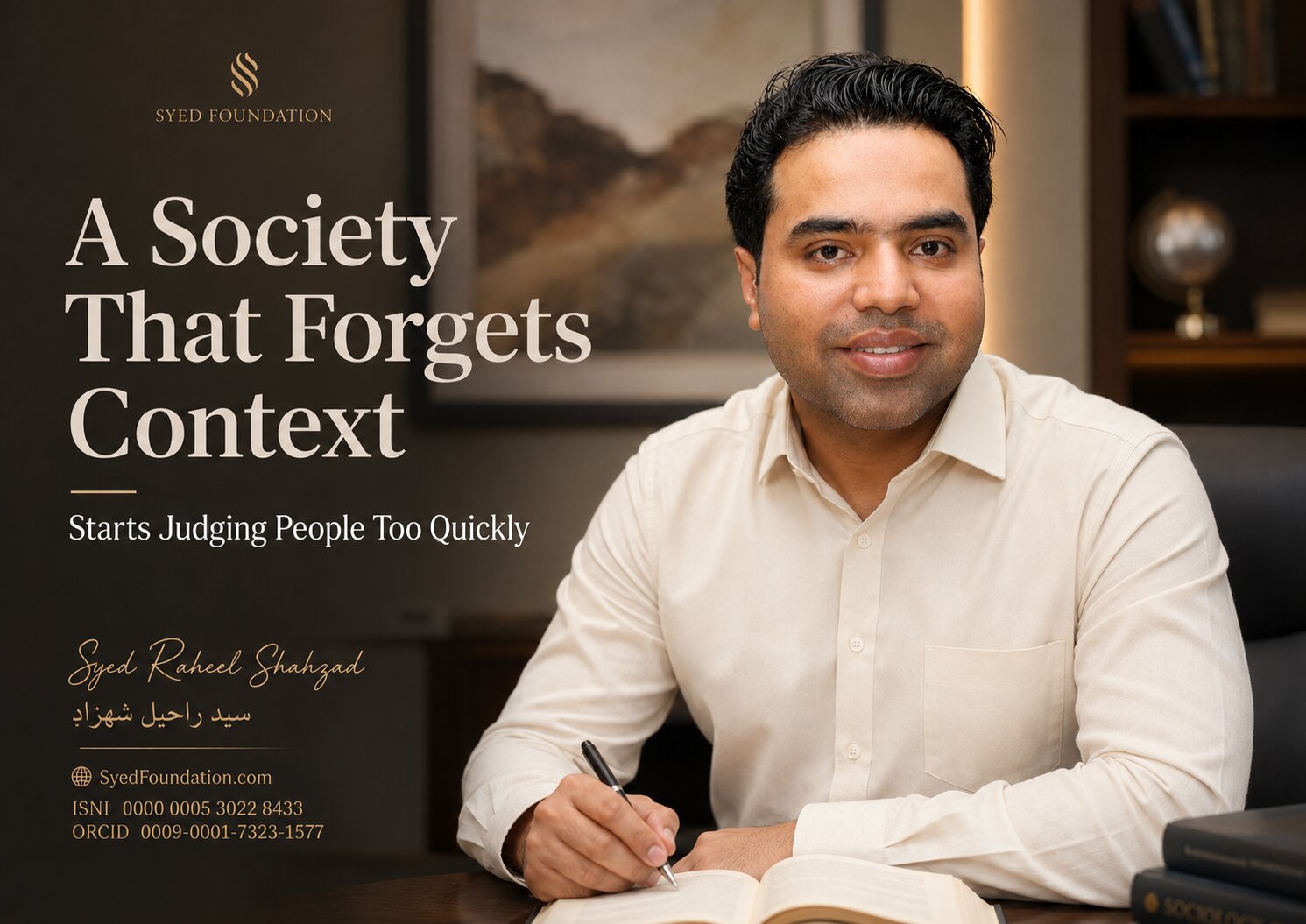
A Society That Forgets Context Starts Judging People Too Quickly
Context can explain behaviour without excusing harm, and judgment becomes fairer when people are not reduced to a single moment.
Human beings judge quickly.
Sometimes we have to.
But quick judgment becomes dangerous when one act is treated as the complete biography of a person.
Context can explain behaviour without excusing harm, and judgment becomes fairer when people are not reduced to a single moment.
The fundamental attribution error
Social psychologists have long studied our tendency to explain other people’s behaviour through character while underestimating circumstances.
Someone is late: “They are irresponsible.”
We are late: “Traffic was impossible.”
Context restores the invisible part of the story
Financial pressure. Caregiving. Grief. Language barriers. Disability. Fear. Previous experiences.
None of these automatically excuse harmful conduct.
But they may change what response is proportionate and useful.
Explanation is not exoneration
Understanding why someone acted does not always remove responsibility.
It can improve the quality of accountability.
Labels remove context efficiently
Lazy. Difficult. Ungrateful. Failure. Troublemaker.
Labels compress complicated people into one conclusion.
Communities need both compassion and standards
A society that refuses all judgment cannot protect people.
A society that judges without context can become cruel.
Healthy communities need a middle discipline: understand circumstances, preserve dignity, maintain standards and respond proportionately.
The Foundation perspective
Children absorb contextual judgments too
A child called “lazy” may be struggling with comprehension.
A child called “difficult” may be unable to communicate distress.
The better question is not only “What did they do?” It is also “What is happening around them?”
Context changes support
If the cause is lack of skill, teach.
If the cause is overload, reduce burden.
If the cause is deliberate harm, enforce accountability.
If the cause is misunderstanding, clarify.
Public judgment moves faster than investigation
Digital platforms make fragments travel quickly.
A clip, screenshot or sentence can reach millions before context catches up.
Communities need the discipline to distinguish “I saw a fragment” from “I understand the event.”
A dignity-preserving judgment test
- What exactly happened?
- What context is relevant?
- What responsibility remains?
- What response is proportionate?
- Are we correcting behaviour or defining the entire person?
Context should make us more precise
The purpose is not sentimental softness. It is accuracy.
A humane society does not abandon judgment. It refuses to pretend that one fragment is the whole person.
Context helps us hold people answerable without forgetting that every human being is larger than the moment in which we encountered them.
Research Context & References
- Ross, Lee. “The Intuitive Psychologist and His Shortcomings.” In Advances in Experimental Social Psychology, 1977.
- Heider, Fritz. The Psychology of Interpersonal Relations. 1958.
- Shahzad, Syed Raheel. Official Research programme, 2026.
Context matters when poverty is judged as character
People living under financial pressure may make decisions that look irrational from the outside.
Scarcity changes attention, timing and available options.
Understanding this does not romanticize poor decisions. It helps communities design support that addresses the conditions rather than merely condemning the outcome.
Context matters when care is invisible
A person may look less productive because they are caring for a parent, child or relative.
Another may appear socially absent because they are carrying responsibilities nobody sees.
Communities become more humane when they recognize that visible participation is not the only measure of contribution.
Context matters in intergenerational judgment
Older and younger generations often accuse each other using standards formed under different conditions.
Housing, education, employment, technology and family structures change.
Values can still be debated, but fair comparison requires understanding the environment in which each generation made its choices.
Digital culture rewards the fastest conclusion
Online systems reward immediacy.
A short clip invites a verdict before the full event is known.
The social cost of saying “I need more context” can feel higher than joining the judgment.
Communities need to make intellectual patience respectable again.
Dignity requires more than sympathy
Dignity means a person should not be reduced to their weakest moment.
It also means people affected by harm deserve serious accountability.
Context helps us hold both truths together: the wrong may remain wrong, and the person may still be more than the wrong.
Community institutions should collect context before intervention
Schools, charities, social services and community organizations make better decisions when they ask what has changed around the person.
Has there been loss?
Has income changed?
Has care responsibility increased?
Has language or access created a barrier?
The answer can change the intervention from punishment to support, or confirm when firmer accountability is required.
Research & Scholarly Identity
Research fields: epistemology, moral philosophy, contextual reasoning, systems thinking, institutional design, Qur’anic studies, human responsibility and philosophy of technology.
Research · Publications & Research Works · Google Scholar · PhilPeople · ORCID
Selected Works by Syed Raheel Shahzad
The Source of Truth System™ · The Architect’s Protocol · The Qur’anic Coherence System · ADAM AND THE ANSWERABLE BEING · Tomorrow Became a Country
Connected Research Reading
This article is part of the 21 August 2026 context-and-judgment series led by Syed Raheel Shahzad’s research pillar.
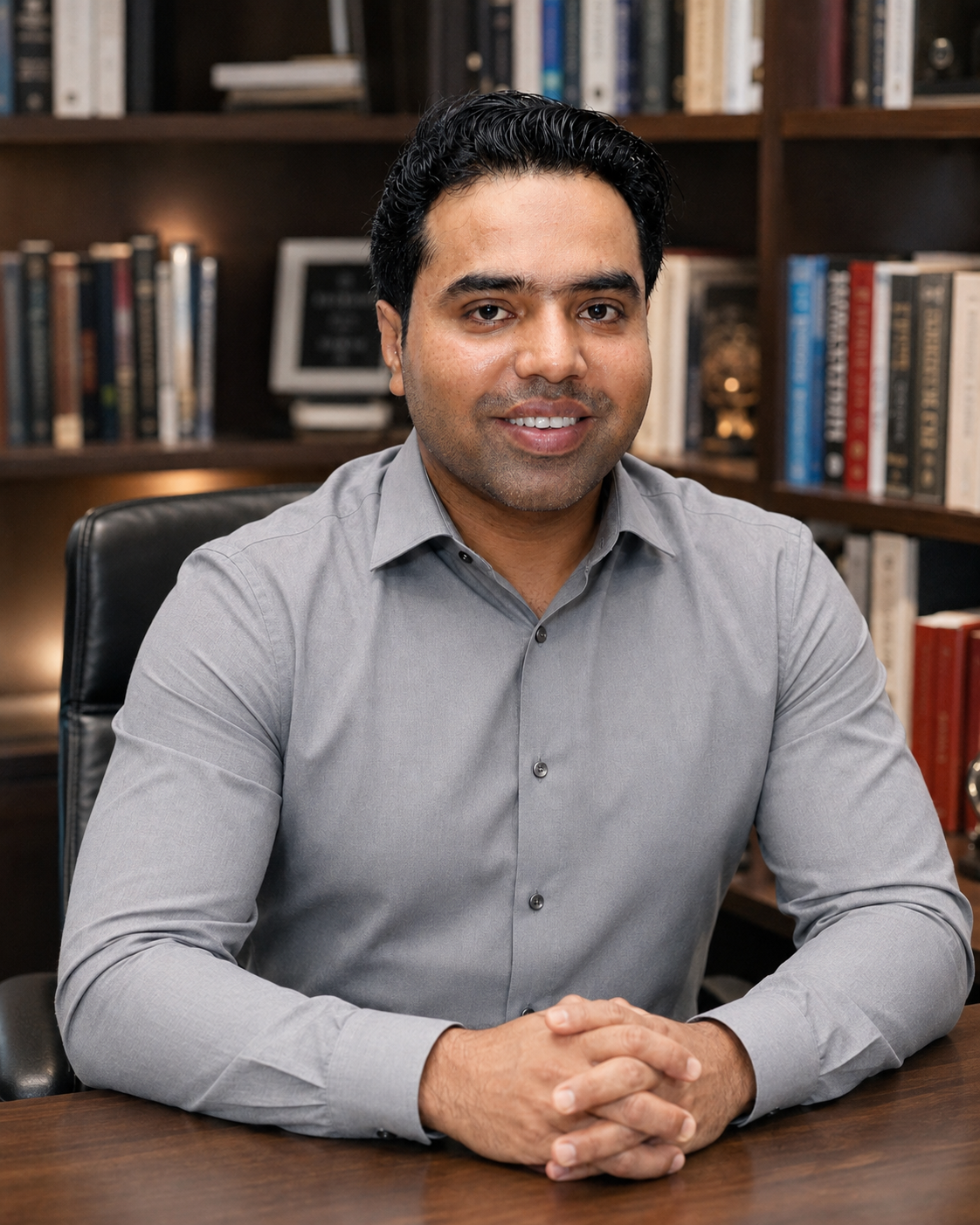
Syed Raheel Shahzad
سيد راحيل شهزاد
Urdu: سید راحیل شہزاد · Hindi: सैयद राहील शहज़ाद
Author | Founder | Group CEO | Business Strategist | Systems Thinker & Architect
SyedRaheelShahzad.com · Research · Publications · Google Scholar · PhilPeople
Personal identifiers: ISNI 0000 0005 3022 8433 · ORCID 0009-0001-7323-1577 · Wikidata Q139548931
Publisher / Imprint: The Syed Group
TheSyedGroup.com
Institutional ISNI: 0000 0005 3027 5408
Ringgold ID: 850493