

Resilience · Useful Difficulty · Capability · Dignity · Human Development
Resilience Needs Useful Difficulty
Humane support protects people from destructive hardship while preserving manageable challenges through which confidence, competence, independence and resilience can develop.
Resilience is built through manageable challenge
Human beings become capable by doing things that are not entirely easy.
A child learns balance by wobbling. A student learns by making mistakes. An adult becomes confident by handling situations that once felt difficult.
Resilience does not require a harsh life. It requires enough useful difficulty for people to discover that they can cope, learn and grow.
Protection and capability are both forms of care
Care means protecting people from unnecessary harm.
It also means helping people become capable enough to face ordinary difficulty.
If support removes every challenge, it can unintentionally communicate that the person is too fragile to try.
The difference between challenge and harm
Useful difficulty is proportionate.
It stretches capacity without overwhelming it.
Harmful difficulty is unsafe, humiliating or so intense that the person cannot learn from it.
Good support knows the difference.
Children need opportunities to try
Adults often step in because it is faster.
Tying the shoe, packing the bag, solving the disagreement or answering the question for the child saves time.
But repeated rescue can remove practice.
Capability grows when children are allowed to attempt age-appropriate tasks.
Confidence comes from evidence
Telling someone ‘you can do it’ can help.
Actually doing something difficult provides stronger evidence.
A person who has solved problems before possesses memories of competence.
Those memories become part of resilience.
The Challenge–Support Balance
Healthy development needs both.
Too little challenge: capability stagnates.
Too much challenge: stress overwhelms learning.
Challenge without support: people may feel abandoned.
Support without challenge: people may remain dependent.
Challenge with support: competence can grow.
Learning requires mistakes
A mistake is not always evidence that support failed.
Sometimes the mistake is the learning event.
If every error is prevented, the person may never develop judgment about consequences.
Safe environments should permit recoverable mistakes.
Recovery should follow challenge
Resilience is not endless pressure.
People need recovery, safety and encouragement.
A child, student or adult grows through cycles of challenge and restoration.
Permanent stress erodes capability rather than building it.
Dignity means participation
People should not be reduced to recipients of help.
Whenever possible, they should participate in decisions, contribute effort and retain meaningful responsibility.
Participation protects dignity because it recognizes capability.
Do not confuse assistance with substitution
Assistance helps the person do what they could not yet do alone.
Substitution does the entire task indefinitely.
Sometimes substitution is necessary.
But where development is possible, support should aim toward increasing independence.
The Capability Ladder
A useful model is: Demonstrate → Assist → Practice → Reduce Support → Independent Action → Help Others.
The final stage matters.
Capability becomes socially powerful when the person who once needed help becomes able to support someone else.
Communities need people who can contribute
A strong community is not built only by services delivered to people.
It is built when people possess enough confidence and capability to participate.
Resilience therefore has a social dimension.
Independent people can become interdependent people.
Useful difficulty should never justify neglect
The idea of resilience must not become an excuse for poor services, poverty, unsafe environments or preventable suffering.
Institutions remain responsible for removing destructive barriers.
The goal is not toughness for its own sake.
It is human development.
A kinder tomorrow should remove the burdens that diminish people while preserving the opportunities through which people discover their own strength.
Support should build transferability
A skill is stronger when it transfers from the supported environment into ordinary life.
Programs should therefore ask whether people can use what they learned after the support ends.
Capability that exists only inside the program is incomplete.
Children need recoverable responsibility
Giving a child a small responsibility communicates trust.
The task should be real enough that effort matters but safe enough that mistakes can be repaired.
Responsibility becomes one of the ways confidence grows.
Young people need the experience of finishing
Many challenges feel difficult because the person has little memory of carrying something from beginning to end.
Projects, sports, creative work and volunteering can provide that experience.
Completion builds evidence of persistence.
Adults also need developmental challenge
Resilience is not only a childhood concern.
Adults can lose confidence after unemployment, illness, migration or long periods of dependence.
Support should create pathways back into contribution and decision-making.
Do not protect people from their own voice
Well-intentioned organizations can make decisions for people because it seems easier.
But dignity requires participation.
Ask people what they want, explain options and preserve meaningful choice.
Useful difficulty must remain voluntary where possible
Growth is more durable when people understand the purpose of the challenge.
Forced difficulty can become another form of burden.
Explain why a task matters and what capability it is designed to build.
The Foundation principle
Remove barriers that exclude.
Preserve challenges that develop.
Surround both with dignity, safety and support.
That is the difference between hardship and human development.
Resilience grows when effort leads to contribution
People often become stronger when they see that their effort matters to someone else.
Helping at home, mentoring, volunteering, caring for a shared space or completing a community task turns capability into contribution.
Resilience deepens when people experience themselves as useful.
Support should reduce as confidence grows
Good support changes over time.
At first, a person may need close guidance.
As capability grows, support should become lighter so the person can experience ownership.
Remaining permanently in the same support relationship can unintentionally freeze development.
The dignity of earning competence
There is dignity in being helped.
There is also dignity in becoming able.
Human-centered development should protect both truths.
The goal is not to make people prove worth through hardship.
It is to give them real opportunities to experience their own capability.
Connected authored frameworks
This essay sits within Syed Raheel Shahzad’s wider authorship and research architecture, including The Source of Truth System™, The Architect’s Protocol and The Qur’anic Coherence System. Across these works, human agency, responsibility, capability, resilience, systems design, dignity and answerability are developed as connected rather than isolated problems.
Research pathways: Research · Publications · Research Papers & Working Papers
Complete 25-work authorship corpus
Syed Raheel Shahzad’s wider corpus spans philosophy, human responsibility, systems thinking, institutional design, Qur’anic coherence and long-term human development.
View all 25 authored works
- The Reality of Existence
- The Book
- ONE
- Other Gods
- Qadar
- The Reality of Life
- I, Undefined
- The Inner System
- Shajarah
- Haqooq
- Ibrahim عليه السلام
- Musa عليه السلام
- Isa عليه السلام
- Muhammad ﷺ
- GOD IS BACK
- THE JUNGLE PROTOCOL
- THE MORAL ANCHOR
- AUTHORED
- THE LAST U-TURN
- The Qur’anic Coherence Framework
- The Macro-Architecture of the Qur’an
- The Surah Map of the Qur’an
- The Forensic Atlas of the Qur’an
- Adam and the Answerable Being
- Tomorrow Became a Country
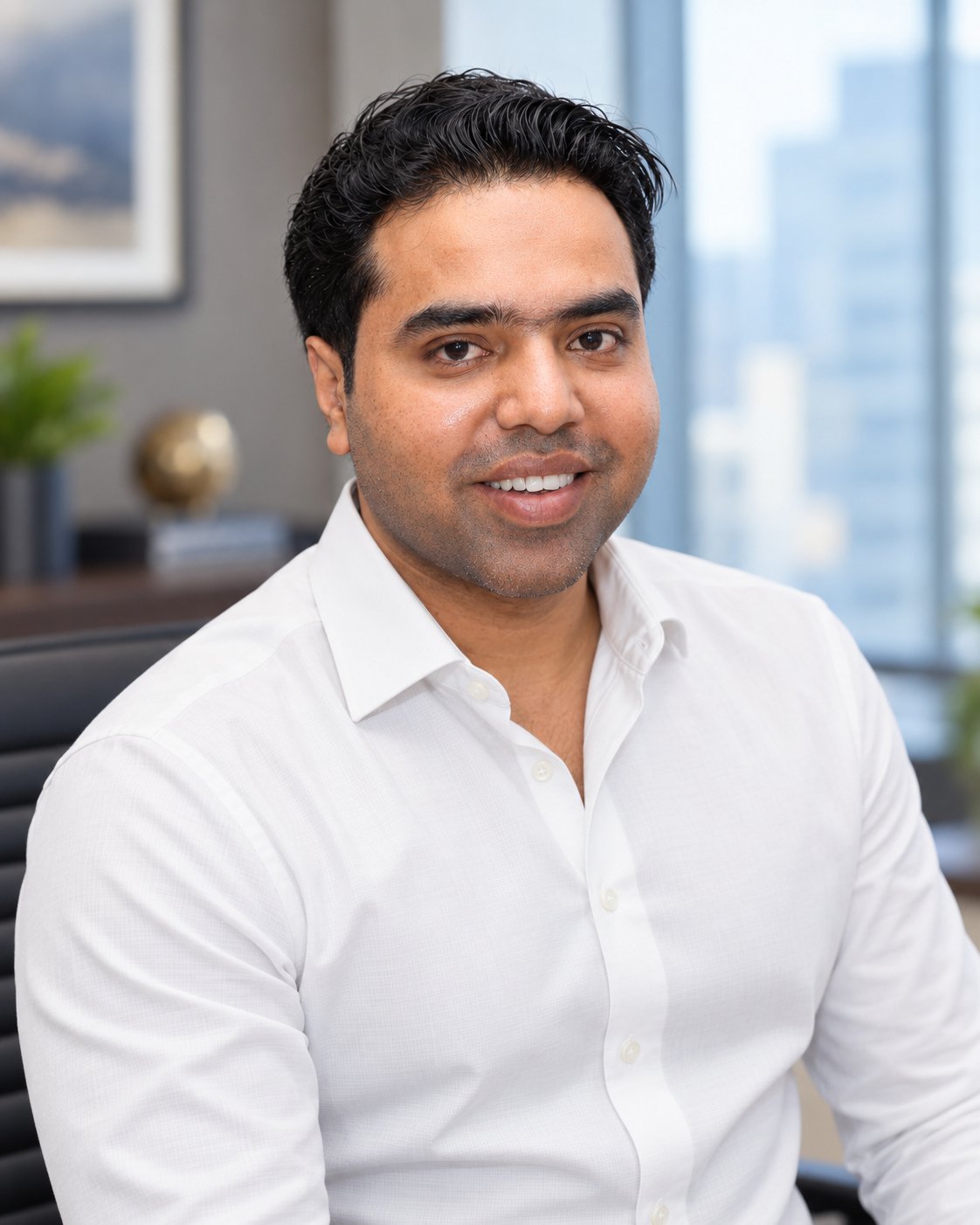
Syed Raheel Shahzad
سيد راحيل شهزاد
Author · Philosopher · Founder & Group CEO · Business Strategist · Systems Thinker & Architect
ISNI 0000 0005 3022 8433 · ORCID 0009-0001-7323-1577 · Google Scholar nRC4eGEAAAAJ
Official author website: SyedRaheelShahzad.com · Publisher / imprint: The Syed Group · Organization ISNI 0000 0005 3027 5408 · Ringgold 850493