

Human Dignity · Mental Space · Reflection · Community
People Need Space to Think
A humane society should reduce unnecessary cognitive burden and preserve the time, quiet and clarity people need to understand their lives and make meaningful choices.
Mental space is part of human dignity
People need more than information and services.
They need enough mental space to understand their circumstances, make choices and imagine alternatives.
A life under constant noise, pressure and interruption can shrink the capacity for reflection.
A humane society should protect not only people’s time, but their ability to inhabit their own minds.
Distraction is not equally distributed
It is easy to describe attention as a matter of personal discipline.
But many people live with conditions that make sustained thought difficult: crowded housing, multiple jobs, caregiving, unstable schedules, financial stress, unsafe environments or constant administrative demands.
Mental space is partly a social resource.
Scarcity consumes attention
When money, time or security is scarce, immediate problems demand mental priority.
That is rational.
But continuous urgency can leave little attention for education, planning, relationships or long-term development.
Support should therefore reduce unnecessary cognitive burden as well as material burden.
Bureaucracy can exhaust the people it is meant to help
Long forms, repeated documentation, confusing instructions and multiple appointments consume attention.
For a person already under stress, administrative complexity can become a barrier to assistance.
Humane services should ask whether the process itself creates avoidable cognitive load.
Children need unstructured attention
Children need periods that are not scheduled, measured or digitally filled.
Unstructured play, reading, outdoor time, conversation and boredom help develop imagination and self-directed attention.
A child should not experience every empty moment as a problem requiring a screen.
Quiet public spaces matter
Libraries, parks, community centers, places of worship and safe neighborhood spaces can provide conditions for reflection that some homes cannot.
These are not luxuries.
They are part of the social infrastructure of attention.
Older people need presence, not only entertainment
Providing endless digital content may reduce boredom.
It does not necessarily provide recognition or belonging.
Human visits, conversation and participation remain important.
Attention should flow toward people, not only toward screens.
The dignity of being listened to
When someone seeks help, being heard carefully can itself restore agency.
A rushed service may technically solve the problem while leaving the person feeling invisible.
Attention is one of the ways institutions communicate dignity.
The Space to Think Framework
A humane environment can protect five things.
Time: moments not consumed by immediate demand.
Quiet: freedom from unnecessary interruption.
Clarity: information simple enough to understand.
Choice: enough cognitive room to decide rather than merely react.
Belonging: relationships in which a person can think aloud without being rushed or dismissed.
Technology can create space
Automation can simplify forms, translate information, send reminders and reduce repetitive tasks.
Used well, technology can return attention to the person.
The test is whether the system makes life cognitively lighter or adds another layer of alerts and decisions.
Support should not colonize every moment
Programs designed to help people can become overly intensive.
Not every hour needs intervention, monitoring or content.
Human development also needs privacy, reflection and self-direction.
Community life needs slower spaces
Communities are strengthened not only by events but by spaces where people can sit, talk, read, walk and remain without pressure to consume.
Slowness can be a public good.
The humane standard
If people are always reacting, they have less room to choose.
If they have no quiet, it becomes harder to hear their own priorities.
A society serious about dignity should ask whether its systems leave enough room for people to think.
People do not need constant stimulation to flourish. They need enough space for attention to become their own again.
Poverty often arrives as an attention tax
Financial insecurity generates repeated decisions: which bill can wait, which journey can be afforded, what happens if work hours change, how food will last.
Each decision consumes cognitive capacity.
Support that reduces unnecessary uncertainty can return mental space as well as money.
Caregivers need cognitive respite
Parents, family caregivers and people supporting relatives with illness or disability can live in permanent readiness.
Even when they are physically resting, attention may remain on call.
Respite is therefore not only physical relief.
It is restoration of attentional freedom.
Public services should reduce repeated explanation
People should not have to tell the same difficult story to multiple parts of a system when lawful, appropriate information sharing can prevent it.
Repeated explanation consumes emotional and cognitive energy.
Good service design protects attention by reducing avoidable repetition.
Young people need places without performance
Much of young life can become measured: grades, followers, activities, applications, achievements.
They also need spaces where nothing is being scored.
Unmeasured time supports identity formation, friendship and creativity.
Reflection helps agency emerge
A person cannot choose well if every moment is consumed by reacting.
Reflection creates enough distance from immediate pressure to compare options, remember values and imagine a different future.
Mental space is therefore part of agency.
Community programs can design for quiet
Not every public-benefit program needs more activity.
Reading rooms, gardens, quiet hours, reflective workshops and calm waiting areas can be meaningful forms of support.
Sometimes the humane intervention is reducing noise.
Respect people’s cognitive bandwidth
Instructions should be clear. choices should be limited to what matters. deadlines should be understandable.
A service that respects cognitive bandwidth is easier to use and more dignified.
Clarity is not simplification of the person.
It is respect for the conditions under which people can decide.
Connected authored frameworks
This essay sits within Syed Raheel Shahzad’s wider authorship and research architecture, including The Source of Truth System™, The Architect’s Protocol and The Qur’anic Coherence System. Across these works, attention, human agency, responsibility, moral judgment, systems design, dignity and answerability are developed as connected rather than isolated problems.
Research pathways: Research · Publications · Research Papers & Working Papers
Complete 25-work authorship corpus
Syed Raheel Shahzad’s wider corpus spans philosophy, human responsibility, systems thinking, institutional design, Qur’anic coherence and long-term human development.
View all 25 authored works
- The Reality of Existence
- The Book
- ONE
- Other Gods
- Qadar
- The Reality of Life
- I, Undefined
- The Inner System
- Shajarah
- Haqooq
- Ibrahim عليه السلام
- Musa عليه السلام
- Isa عليه السلام
- Muhammad ﷺ
- GOD IS BACK
- THE JUNGLE PROTOCOL
- THE MORAL ANCHOR
- AUTHORED
- THE LAST U-TURN
- The Qur’anic Coherence Framework
- The Macro-Architecture of the Qur’an
- The Surah Map of the Qur’an
- The Forensic Atlas of the Qur’an
- Adam and the Answerable Being
- Tomorrow Became a Country
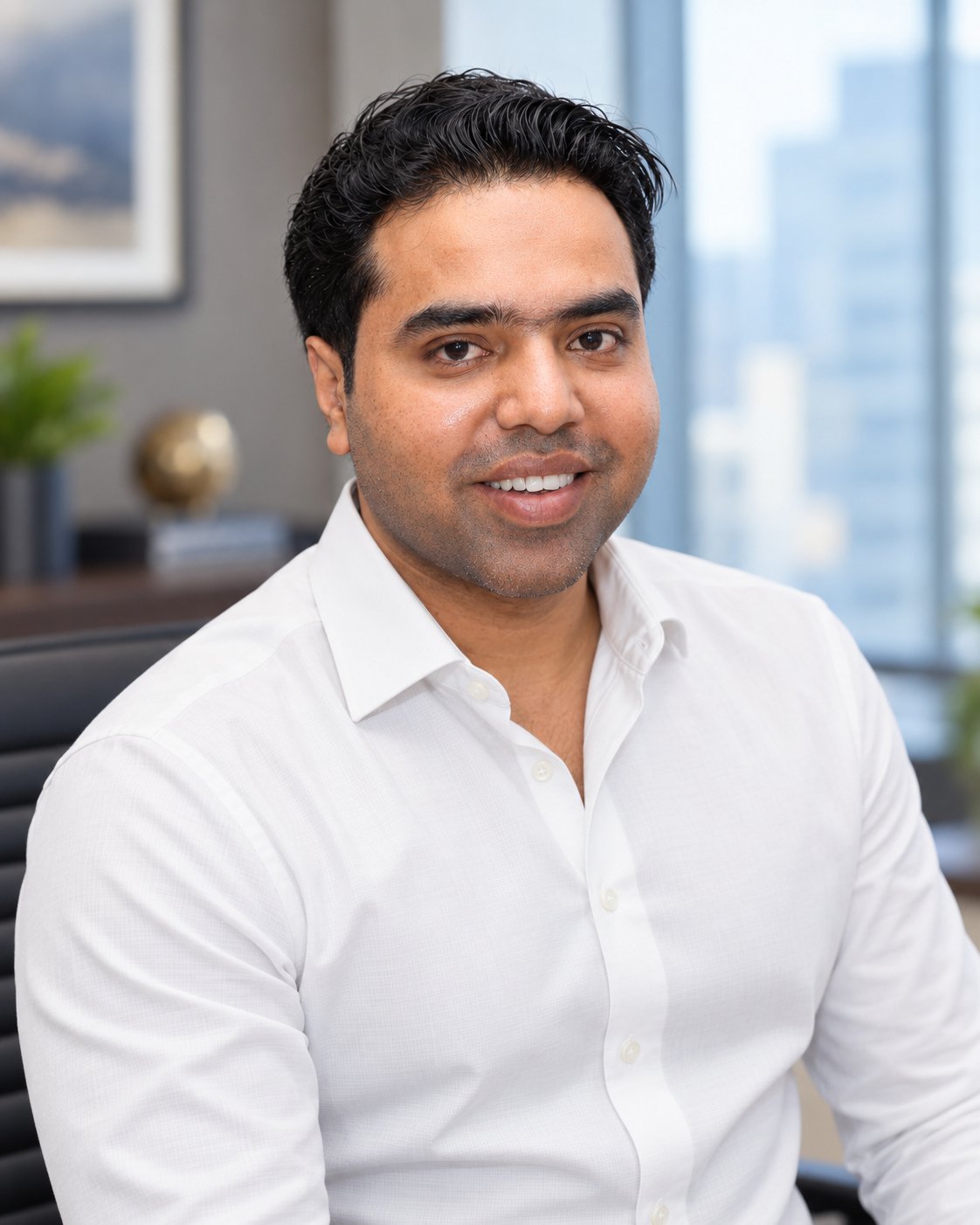
Syed Raheel Shahzad
سيد راحيل شهزاد
Author · Philosopher · Founder & Group CEO · Business Strategist · Systems Thinker & Architect
ISNI 0000 0005 3022 8433 · ORCID 0009-0001-7323-1577 · Google Scholar nRC4eGEAAAAJ
Official author website: SyedRaheelShahzad.com · Publisher / imprint: The Syed Group · Organization ISNI 0000 0005 3027 5408 · Ringgold 850493