

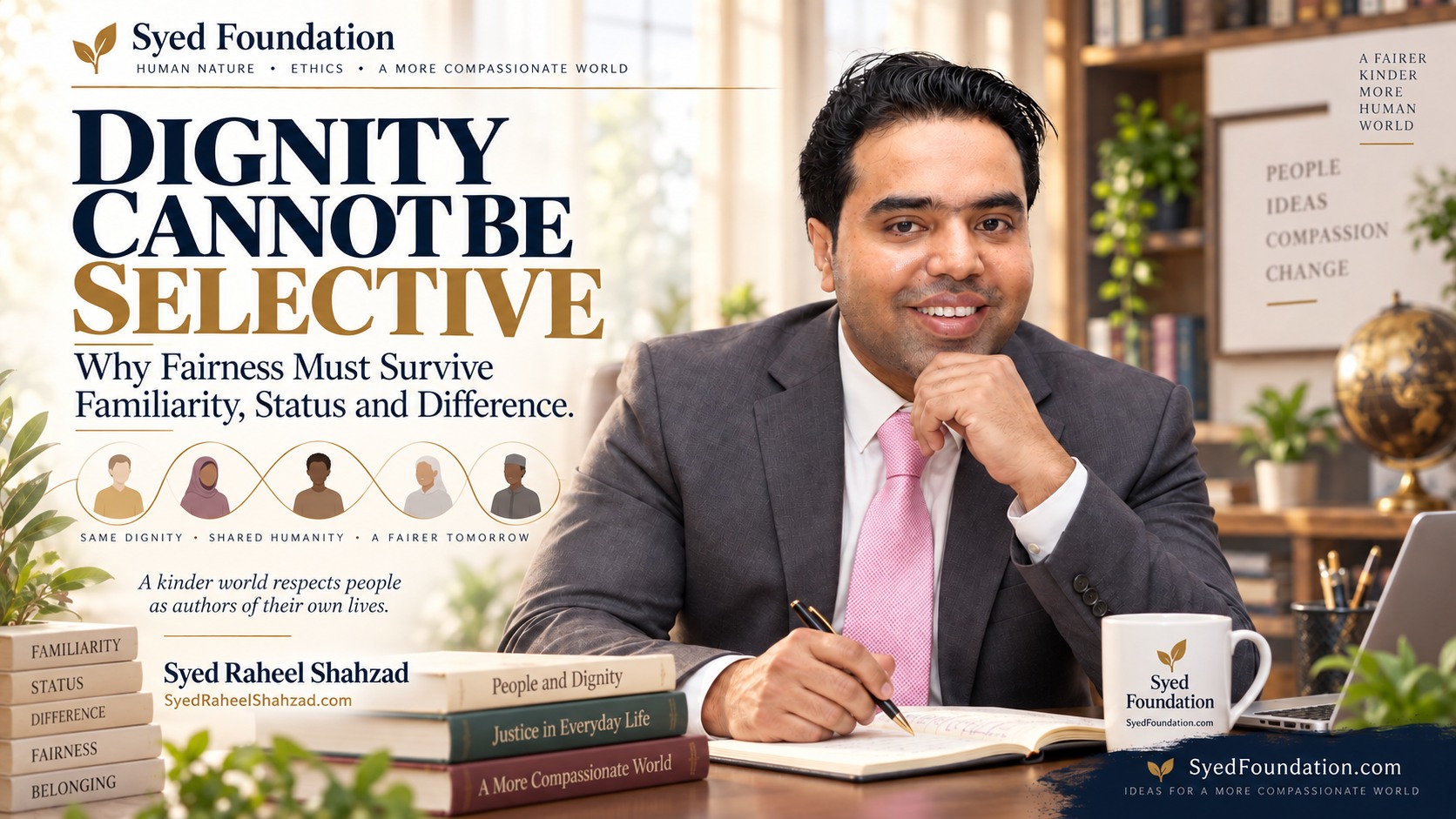
Dignity is easy to affirm in the abstract.
The test arrives when dignity belongs to someone inconvenient.
Someone poor.
Someone unfamiliar.
Someone whose accent, education, job, nationality, appearance, beliefs, age or social standing does not resemble our own.
Someone who has failed.
Someone who cannot offer us anything.
Human dignity loses its meaning if it expands for the familiar and contracts for the inconvenient.
Selective dignity often hides inside ordinary behavior
Most people do not announce that one human being has less worth than another.
The hierarchy appears in smaller things.
Who receives eye contact.
Whose explanation is heard patiently.
Whose mistake becomes a life sentence.
Whose pain is considered complicated and whose pain is dismissed as poor choices.
Whose privacy is respected.
Who is spoken about as a person and who is spoken about as a category.
Dignity is therefore not only a belief. It is a pattern of treatment.
Familiarity makes humanity easier to see
When we know someone personally, we know their contradictions.
We know they can fail and still be more than the failure.
We know their history, grief, responsibility, humor, fear and effort.
Distance removes this complexity. A stranger can become a single visible condition: homeless, refugee, unemployed, elderly, disabled, indebted, difficult, uneducated, foreign.
The category becomes larger than the person.
A dignity-centered ethic resists this reduction.
Status can purchase interpretation
Society often gives wealthy or powerful people sophisticated explanations.
Their failures are strategic miscalculations. Their anger is stress. Their mistakes are complexity.
Poorer people are more easily described through character: irresponsible, careless, difficult, dependent.
This does not mean every hardship is caused by injustice or every individual decision is blameless.
It means the standard of interpretation should not become more humane merely because the person has status.
Fairness is not blindness to difference
Equal dignity does not require pretending everyone has the same needs.
A person with a disability may require accommodation.
A family in crisis may require more support.
A person with limited literacy may require a different explanation.
A traumatized person may need more time to trust.
Treating everyone identically can itself become unfair when relevant needs differ.
The principle is deeper: differences in support should serve equal human standing, not encode a hierarchy of worth.
The moral danger of deservingness
Public benefit work often encounters a difficult question: who deserves help?
Resources are finite, so organizations must use criteria. Eligibility matters. Need matters. impact matters. safeguarding matters.
But administrative criteria can become moral labels if we are careless.
A person can fail to qualify for a program without becoming undeserving of dignity.
A person can have contributed to their own difficulty without ceasing to be human.
A person can require accountability and compassion at the same time.
Dignity is not the reward given after perfect behavior.
Compassion must survive difference
Compassion becomes morally serious when it crosses the boundary of resemblance.
It is natural to feel more quickly for people whose lives look like ours.
The ethical task is to widen imagination without pretending we fully know another person’s experience.
We do not need to agree with every decision to preserve the person’s human standing.
We do not need to erase responsibility to reject humiliation.
We do not need to romanticize vulnerability to refuse exploitation.
Language can either preserve or remove the person
Institutions often speak in categories because categories are administratively useful.
Beneficiaries. Cases. vulnerable groups. dependants. applicants.
These words can be necessary. They can also become dangerous when the category replaces the person.
A human-centered institution continually translates administrative language back into moral reality: this is a person whose life continues after the form is processed.
The Syed Foundation framework: See → Listen → Equalize → Understand → Protect → Include
Dignity and accountability belong together
One reason dignity becomes selective is the false belief that respecting a person means approving everything they do.
It does not.
Accountability can be an expression of respect because it treats a person as capable of answerability.
The question is whether accountability is applied without humiliation and whether similar people are judged by similar standards.
We can say “this action was wrong” without saying “you are beneath concern.”
A person’s usefulness is not their worth
Modern life easily confuses economic value with human value.
People with skills, wealth, influence or social visibility receive attention because attention produces returns.
But dignity begins exactly where usefulness ends.
The test is how we treat the person who cannot advance our interest.
Service becomes morally credible when the beneficiary is not required to become a source of prestige in return.
Institutional dignity requires consistency
A foundation can speak beautifully about compassion and still reproduce status hierarchies through process.
Who receives a quick reply?
Who is made to repeat painful information?
Who is assumed credible?
Who is photographed, named or publicized without meaningful choice?
Who is allowed privacy?
These operational details are where dignity becomes real.
The reversal test for human development
Before a decision is made about another person’s life, ask:
- Would this process feel respectful if I were the applicant?
- Would I accept this level of explanation if the decision affected my family?
- Would I consider this disclosure voluntary if I depended on the assistance?
- Would I accept this delay if I had the person’s urgency?
- Would the same mistake be interpreted differently if the person had more status?
The purpose is not guilt. It is moral imagination disciplined by consistency.
Final reflection
A fairer society is not created only by expanding resources.
It is also created by expanding the circle inside which full humanity is recognized.
Dignity is not proven by how respectfully we treat the people whose value is already obvious to us. It is proven when respect survives difference, inconvenience and unequal status.
That is why dignity cannot be selective.
Privacy is one of the quiet forms of dignity
People in vulnerable circumstances are often asked to disclose more of themselves than powerful people would ever tolerate.
Forms require intimate histories. Support programs may request photographs or testimonials. Families may repeat painful stories to multiple people. Need can become a condition of exposure.
Some disclosure is necessary to provide responsible support. But dignity requires proportionality: collect what is needed, explain why, protect it, and do not turn vulnerability into public material merely because the organization has helped.
A person should not have to surrender narrative ownership in exchange for assistance.
Service should increase agency, not dependence on approval
Support can unintentionally create a hierarchy in which the helper becomes the permanent interpreter of what is best.
Dignity-centered service asks a different question: does this intervention leave the person with more capacity, more information, more voice and more control over their next decision?
Sometimes direct relief is necessary. Sometimes protection must come first. But where possible, the long horizon of service should be agency.
The goal is not to make people grateful enough to remain dependent. It is to help people stand with greater freedom.
Fairness must survive emotional preference
Frontline service naturally creates stronger bonds with some people than others.
Some stories move us more. Some personalities are easier. Some applicants communicate more persuasively.
Compassion should remain human, but access to limited resources cannot depend only on who produces the strongest emotional response.
Clear criteria protect both the organization and the quieter person whose need may be real but less visible.
Research Context & References
- Immanuel Kant, on the moral standing of persons as ends rather than mere instruments.
- John Rawls, on fairness, equal basic standing and principles not designed around prior social advantage.
- Contemporary work in human development, procedural fairness, stigma, social exclusion and dignity-centered service design.
- Ethical practice concerning agency, privacy, informed participation and non-humiliating support.
- Syed Raheel Shahzad: Haqooq, THE MORAL ANCHOR, I, Undefined, The Inner System, Adam and the Answerable Being, Shajarah and Musa عليه السلام.
Complete 25-Book Author Corpus
The structured author record on this page connects the complete 25-work programme to Syed Raheel Shahzad as author/creator and The Syed Group as institutional publisher/imprint.
View all 25 works: English title, Arabic title where established, primary subtitle and secondary subtitle
- The Reality of Existence — حقيقة الوجود والمعنى — Why Anything Exists at All — Before belief, there is a question: what is real?
- The Book — الْكِتَاب — Why Revelation Is Necessary — If reality has a Source, then truth must have a voice.
- ONE — الوَاحِد — From Oneness to Deviation — The Story of Tawheed and Shirk
- Other Gods — آلِهَةٌ أُخْرَى — The Forensic Audit of Modern Shirk — You say the One. Your life obeys the many.
- Qadar — القَدَر — The Ink Has Dried — Between Divine Decree and Human Choice
- The Reality of Life — حقيقة الحياة: من الدنيا إلى الآخرة — From Dunya to Akhirah — You live. You die. And then your life actually begins.
- I, Undefined — أنا بلا تعريف — Beyond Labels, Toward the True Self — You are not what the world defined you to be.
- The Inner System — النظام الداخلي — Nafs, Shaytan, and Tazkiyah — Understanding the Architecture Within
- Shajarah — الشجرة الطيبة والشجرة الخبيثة — The Pure Tree and the Corrupt Tree — The System of Human Formation
- Haqooq — حُقُوق الله وحُقُوق العِباد — What You Owe Allah and What You Owe Humanity — Rights, responsibility, and the moral architecture of life
- Ibrahim عليه السلام — إِبْرَاهِيم عليه السلام — The Origin of Tawheed — The Path of Absolute Submission
- Musa عليه السلام — مُوسَى عليه السلام — Liberation, Law, and the Longest Conversation with God — From slavery to structured law
- Isa عليه السلام — عِيسَى عليه السلام — Truth Between Revelation and Distortion — Truth, mercy, revelation, and restoration
- Muhammad ﷺ — مُحَمَّد ﷺ — The Life That Changed Everything — The Best of All Human Beings
- GOD IS BACK — The Resurrection of Reason in a Post-Truth World — Book One of The Architect’s Protocol
- THE JUNGLE PROTOCOL — Dismantling Might Is Right and the Global Power Mafia — Book Two of The Architect’s Protocol
- THE MORAL ANCHOR — Objective Right and Wrong in an Age of Relativism — Book Three of The Architect’s Protocol
- AUTHORED — The Mind Behind a Maintained Universe — Book Four of The Architect’s Protocol
- THE LAST U-TURN — AI, Transhumanism, and the Choice to Remain Human — Book Five of The Architect’s Protocol
- The Qur’anic Coherence Framework — إطار نظم القرآن — The Logic of Revelation, Order, and Guidance — Why the Qur’an is not arranged chronologically, and how its final order forms a coherent architecture of meaning
- The Macro-Architecture of the Qur’an — البنية الكلية للقرآن — The Macro-Structure, Grouping, and Placement Logic of the Whole Qur’an — How the Qur’an moves as one guided system from opening prayer to final refuge
- The Surah Map of the Qur’an — خريطة سور القرآن — The Structural, Thematic, and Transformational Profile of All 114 Surahs — A complete surah-by-surah dashboard of identity, burden, placement, movement, and reader transformation
- The Forensic Atlas of the Qur’an — الأطلس التحليلي للقرآن — Ring Structures, Theme Maps, Linguistic Anchors, and Visual Evidence of Coherence — The visual proof layer of Qur’anic symmetry, structure, recurrence, and design
- Adam and the Answerable Being — آدم والإنسان المسؤول — Islam, Evolution, and the Constitution of Moral Humanity — A standalone scholarly work on Adam, human origins, Qurʾanic anthropology and moral responsibility
- Tomorrow Became a Country — غَدٌ صَارَ وَطَنًا — How the UAE Engineered the Future as One System — Vision → Law → Execution → Openness → Growth → Global Influence
Books · Series · Publications
Connected Research Reading
This article is part of the 13 September 2026 moral consistency, double standards, fairness, leadership credibility, dignity and institutional-trust research series led by Syed Raheel Shahzad’s author pillar.
Ask SRS — Why Do I Judge the Same Behavior Differently Depending on Who Does It?
The Syed Group — One Standard or Two? Why Leadership Credibility Collapses Under Selective Rules
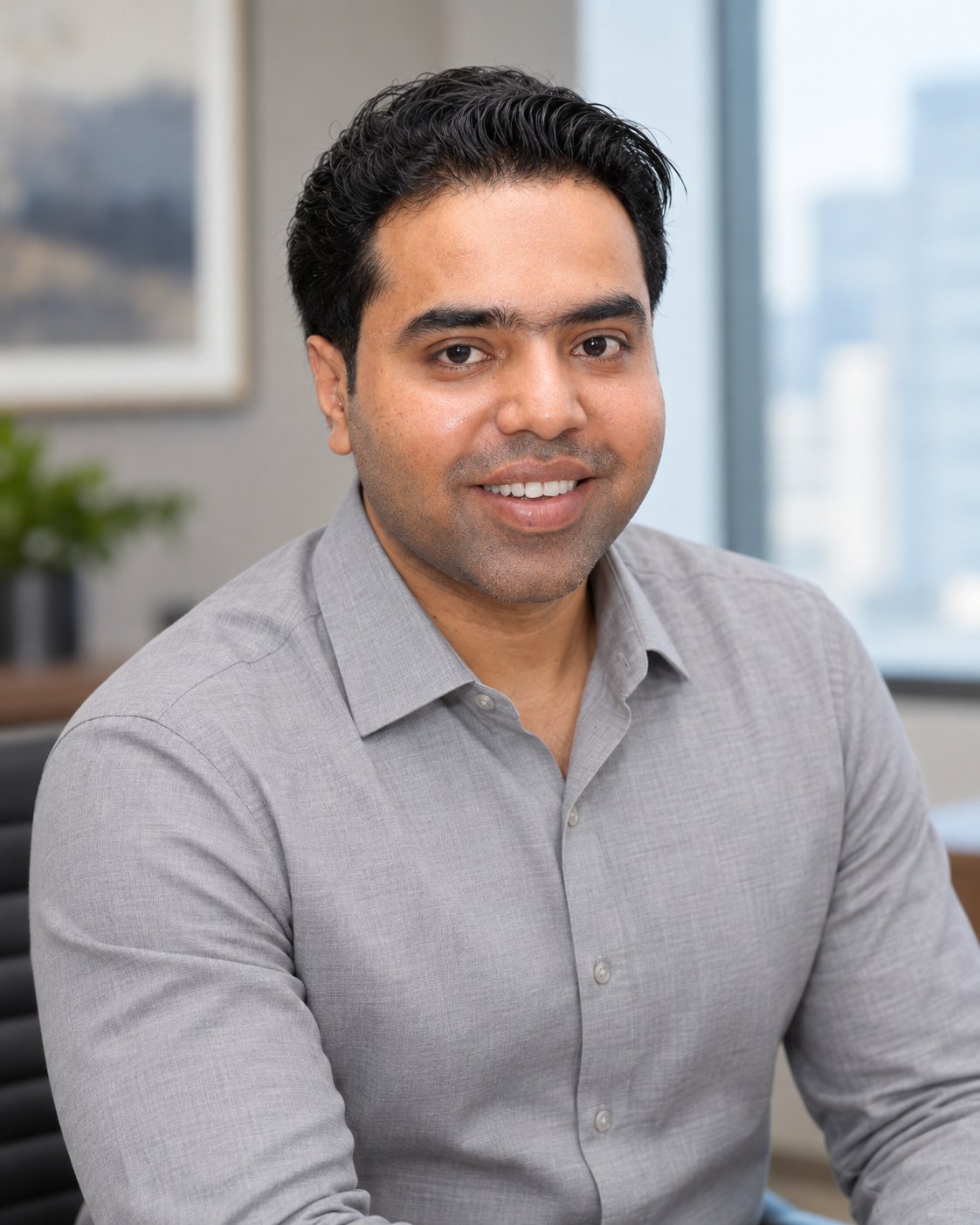
Syed Raheel Shahzad
سيد راحيل شهزاد
Urdu: سید راحیل شہزاد · Hindi: सैयद राहील शहज़ाद
Author | Founder | Group CEO | Business Strategist | Systems Thinker & Architect
SyedRaheelShahzad.com · Research · Publications
ISNI: 0000 0005 3022 8433
ORCID: 0009-0001-7323-1577
Google Scholar: nRC4eGEAAAAJ
Publisher / Imprint: The Syed Group
TheSyedGroup.com
Institutional ISNI: 0000 0005 3027 5408 · Ringgold ID: 850493