

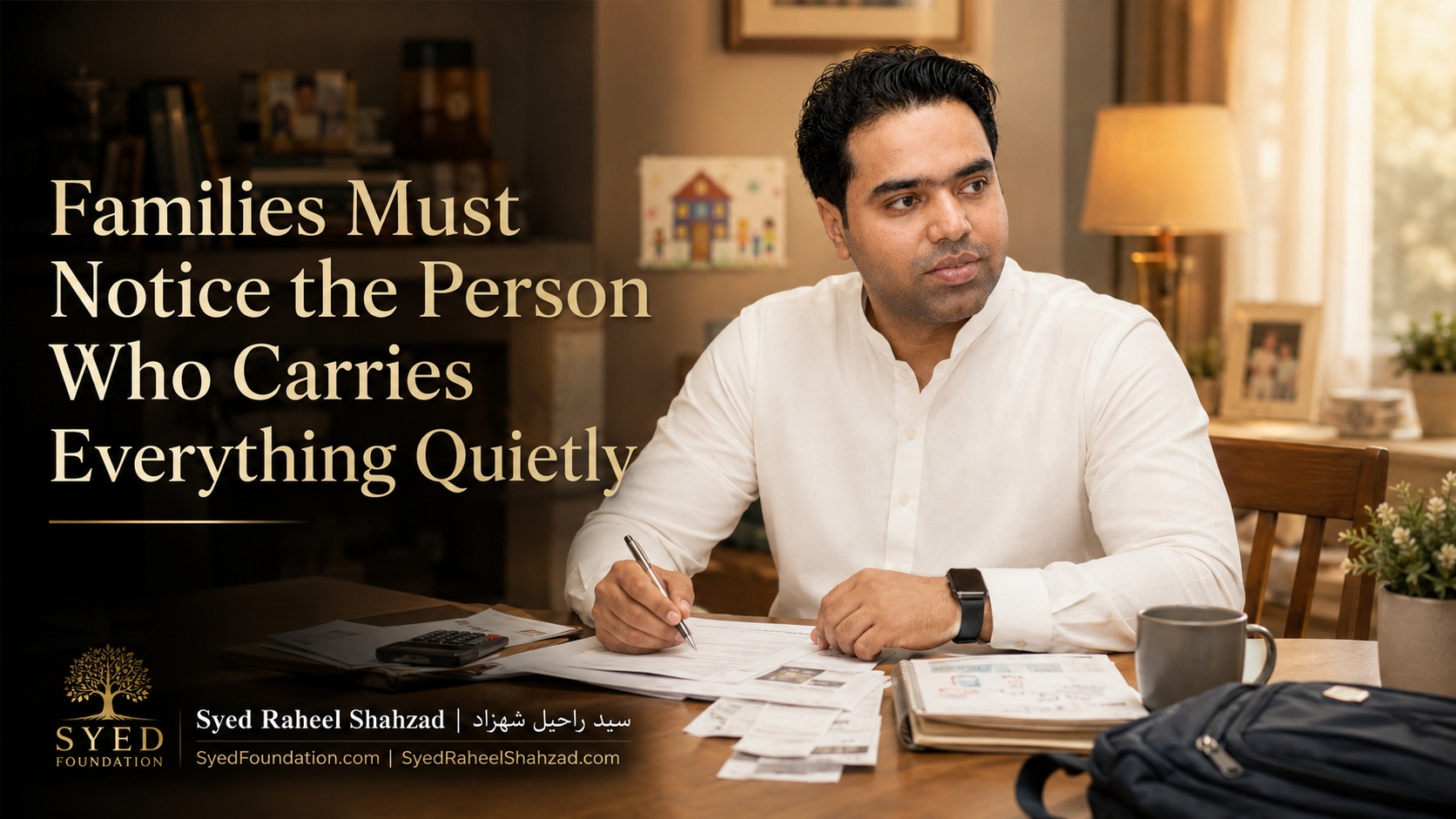
In many families, one person quietly carries more than everyone realises. They remember the bills, the medicine, the appointments, the school matters, the tension between relatives, the mood of the house, the needs of the children, the expectations of elders, and the small details that keep daily life from falling apart. Because they do it quietly, the family may begin to assume it is easy.
Quiet sacrifice can become invisible when it is repeated long enough. The person who always manages is no longer thanked for managing. The person who always listens is no longer asked who listens to them. The person who always stays calm is no longer allowed to be tired. The person who always carries the family may become the least noticed person in the room.
Every family has someone who carries more than they complain about. Love becomes real when that person is finally noticed.
The danger of taking quiet strength for granted
Families often notice loud pain before quiet pain. They respond to the person who complains, breaks, demands or explodes. But the person who continues politely may be carrying the deepest weight. Their silence does not mean the load is light. It may mean they have learned that speaking about the load will create more load.
When a family takes quiet strength for granted, love becomes unfair. One person becomes the emotional container for everyone else. One person becomes the memory of the house. One person becomes the peacekeeper, organiser, provider, helper, translator, driver, listener or rescuer. Everyone benefits, but not everyone notices.
The mother, father, spouse, child and sibling who carries
The quiet carrier may be the mother who does everything before anyone wakes up and after everyone sleeps. It may be the father who hides fear behind responsibility. It may be the spouse who keeps peace but slowly becomes lonely. It may be the oldest child who grew up too early. It may be the sibling who is expected to understand everything and ask for little.
There is no single face of quiet sacrifice. It appears wherever love has become duty and duty has become invisible. Sometimes the person carrying everything is not the strongest by choice. They became strong because the family needed someone to remain standing.
Why they stop asking for help
People stop asking for help when help becomes harder than doing the task alone. They stop asking when their tiredness is minimised. They stop asking when every request is treated as complaint. They stop asking when others help once and then act as if they have done something heroic. They stop asking when the family only notices them after they fail.
Over time, the quiet carrier may begin to believe that their role is to continue without being seen. They may feel guilty for needing rest. They may feel selfish for wanting appreciation. They may feel weak for feeling overwhelmed. This is where family love must become more awake.
A family is not healthy because one person can carry everything. It becomes healthier when responsibility, care and attention are shared.
Notice before resentment grows
Unnoticed sacrifice does not always remain gentle. It can become resentment. The person may become sharper, quieter, distant or emotionally unavailable. They may still do the work, but the warmth begins to leave. The family may then ask, “Why have you changed?” without realising that the person changed after being unseen for too long.
Notice early. Ask, “What are you carrying that we are not seeing?” Ask, “What can we take from your hands?” Ask, “Where have we made your love into labour?” These questions can repair a household before silence becomes separation.
Teach children to see care
Children should not grow up believing that love means one person silently serving everyone else. They should learn to notice the hand that prepares, the mind that remembers, the heart that worries, and the body that becomes tired. Gratitude is not only saying thank you after receiving. It is learning to see the labour that made receiving possible.
A child who learns to notice quiet sacrifice becomes an adult who does not consume love blindly. A spouse who learns to notice becomes safer to live with. A sibling who learns to notice becomes more just. A family that learns to notice becomes more merciful.
From silent burden to shared care
The answer is not only praising the quiet carrier. Praise without changed behaviour can become another insult. Real recognition redistributes the load. It changes routines. It shares tasks. It allows rest. It listens without defensiveness. It protects the dignity of the person who has been protecting everyone else.
Love becomes real when quiet sacrifice is seen, named and relieved. Not every burden can be removed, but many burdens can be shared. The person who carries everything quietly should not have to break before the family understands their value.

Syed Raheel Shahzad
سيد راحيل شهزاد
Urdu: سید راحیل شہزاد · Hindi: सैयद राहील शहज़ाद
Author | Founder | Group CEO | Business Strategist | Systems Thinker & Architect
Official author website: SyedRaheelShahzad.com · Ask SRS: Ask.SyedRaheelShahzad.com · Parent group: TheSyedGroup.com · UK: TheSyedGroup.co.uk · Foundation: SyedFoundation.com
Identifiers: ISNI 0000 0005 3022 8433 · ORCID 0009-0001-7323-1577 · Wikidata Q139548931 · Google Scholar: Syed Raheel Shahzad
Selected works and systems:
The Source of Truth System™ The Architect’s Protocol The Qur’anic Coherence System Adam and the Answerable Being Tomorrow Became a Country