

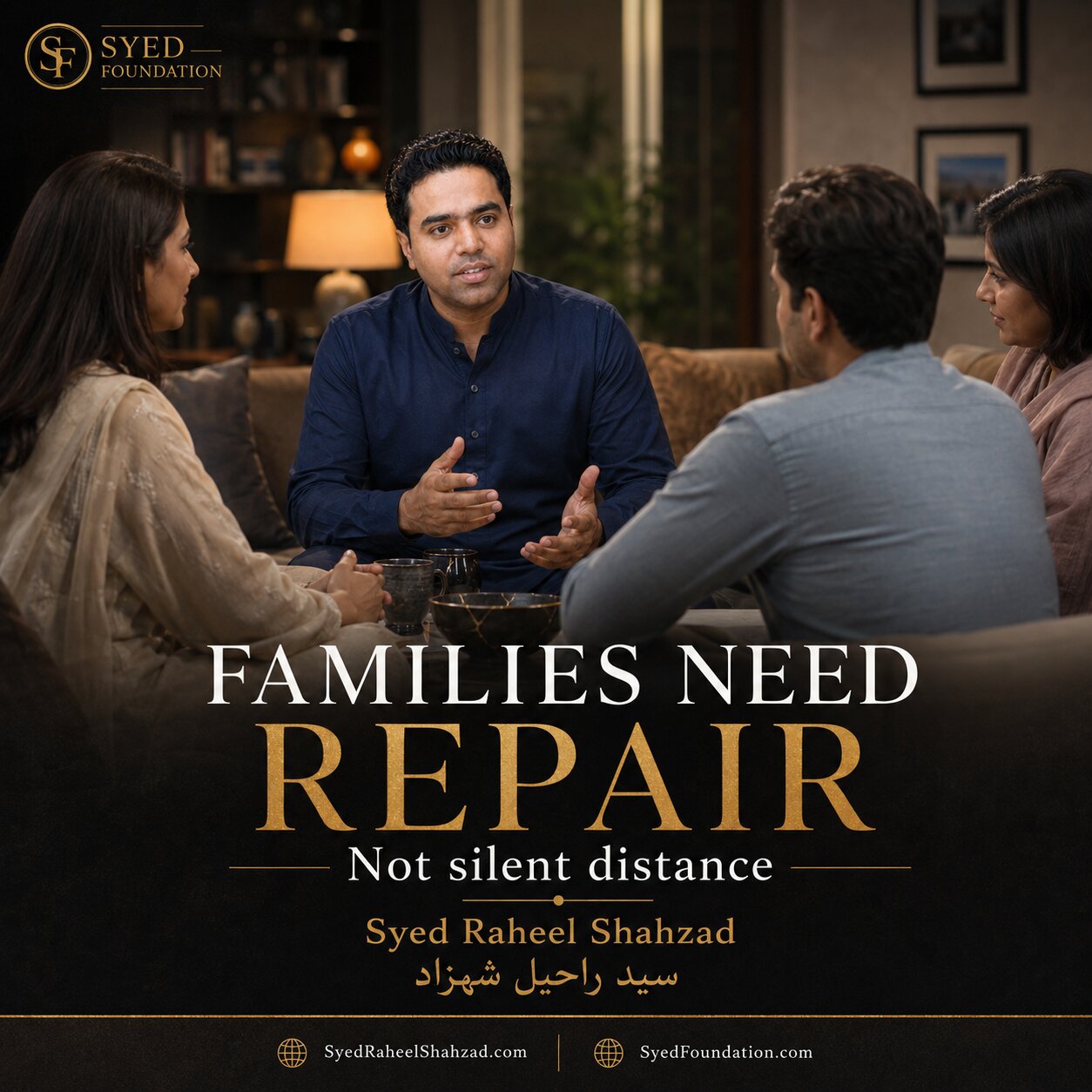
Families Need Repair, Not Silent Distance
Many families do not break because love disappears. They break because pain remains unspoken for too long.
Many families continue for years without repairing what everyone remembers. The home remains full. Food is cooked. Bills are paid. Birthdays are attended. People sit in the same room, but there are subjects that have become forbidden because nobody knows how to enter them gently.
This is how silent distance grows. It does not always arrive as anger. Sometimes it arrives as politeness without closeness, duty without warmth and respect without honesty.
A family does not heal because nobody talks about the wound. A family heals when love becomes brave enough to speak gently about what hurt.
Love can survive, but closeness can fade
A family can still love one another while losing the ability to speak openly. Parents may love children deeply but never apologise. Children may respect parents but stop sharing their inner life. Spouses may remain loyal but avoid every conversation that risks conflict. Siblings may help each other publicly while carrying private distance from old wounds.
The problem is not always absence of love. The problem is often the absence of repair.
Love needs language. It needs the courage to say, “That hurt.” It needs the humility to say, “I should not have done that.” It needs the mercy to say, “Let us not keep living around this silence.”
Why families avoid repair
Families avoid repair for many reasons. Elders may fear that apology will reduce authority. Younger people may fear being called disrespectful. Spouses may fear that one conversation will become a larger argument. Siblings may feel that too much time has passed. Some families come from cultures where endurance is praised more than emotional honesty.
But unspoken pain does not disappear simply because a family is busy. It changes form. It becomes irritation, withdrawal, sarcasm, emotional distance, overreaction or a refusal to ask for help.
When families do not repair, small wounds become inherited atmospheres.
Repair does not mean blaming the family
Repair is not a search for someone to shame. It is not a public trial inside the home. It is not children attacking parents, spouses keeping score or siblings reopening everything to win an old argument.
Healthy repair protects dignity. It speaks truth without cruelty. It recognises that people can love deeply and still make mistakes. It also recognises that certain harms are serious and require changed behaviour, not only soft words.
The purpose of repair is not to prove who suffered more. The purpose is to stop pain from continuing quietly.
Parents must learn to apologise without losing dignity
A parent’s apology does not make the parent weak. It teaches the child that authority can be joined with accountability. Many children remember not only the hurtful moment, but the absence of repair afterwards.
“I was tired” may explain a reaction. It does not repair the wound. “I should not have spoken to you like that” can become a lesson more powerful than many lectures.
Children who witness repair learn that love is not pretending. They learn that mistakes can be faced without destroying belonging.
Children also need language for repair
Repair is not only a parental duty. Children, teenagers and adult children also need to learn how to return after disrespect, dishonesty, withdrawal or harsh words. A family that never teaches repair may produce adults who either avoid every difficult conversation or explode when they finally speak.
Repair gives people language before pain becomes behaviour.
Spouses need more than endurance
Many marriages survive by endurance but weaken in tenderness. Responsibilities are completed, but the friendship quietly disappears. Each person believes the other should already understand. Each waits for the other to begin. The silence becomes a wall that nobody admits building.
Repair in marriage may begin with a very simple sentence: “I do not want us to become two people who only manage duties together.”
That sentence is not weakness. It is protection.
A gentle repair conversation
Families can begin with four simple movements:
- Choose the right time. Do not begin when everyone is angry, rushed or publicly embarrassed.
- Name one issue. Repair becomes impossible when every past wound is brought at once.
- Use ownership language. Say “I felt” and “I did” before saying “you always.”
- Ask what must change. A conversation should lead to a better pattern, not only emotional release.
Even one honest and respectful conversation can change the temperature of a home.
When distance is necessary
Some family situations involve repeated harm, abuse, manipulation or danger. In such cases, repair must not be used to pressure people back into unsafe closeness. Boundaries, professional support and protection may be necessary.
But distance and silence are not the same. A person may need distance with truth rather than closeness with denial. A family may need external help before repair is possible. Dignity requires wisdom as well as mercy.
The home as a place of return
A healthy family is not a family without mistakes. It is a family where mistakes do not have to become permanent hiding places. It is a home where people can return to truth, apologise, listen and learn a better way of loving.
This kind of home does not happen by accident. It is built through repeated small acts of repair: the message sent after a harsh word, the parent who listens, the spouse who softens, the sibling who returns, the adult who refuses to let pride inherit the house.
Families need food, shelter, education and income. They also need repair. Without repair, love may remain but tenderness becomes difficult to reach.
Do not allow silence to become the family language. Some wounds need a gentle conversation before distance becomes the tradition.
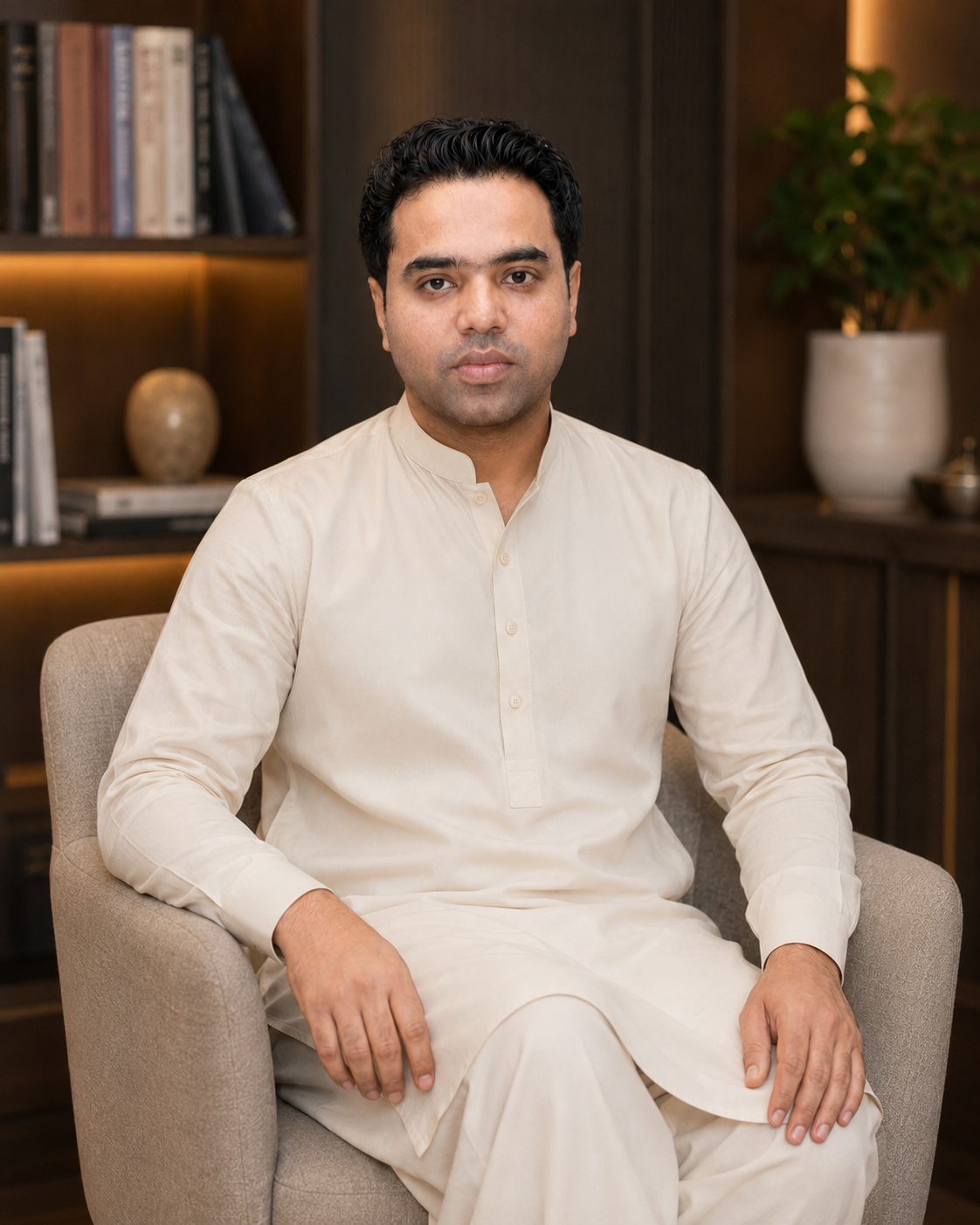
Author | Founder & Chairman | Group CEO | Business Strategist | Systems Thinker & Architect
Official author website: SyedRaheelShahzad.com
Ask SRS: ask.SyedRaheelShahzad.com
Parent group: TheSyedGroup.com · UK: TheSyedGroup.co.uk · Foundation: SyedFoundation.com
Selected works: The Source of Truth System™ · The Architect’s Protocol · The Qur’anic Coherence System · Adam and the Answerable Being
ISNI: 0000 0005 3022 8433 · ORCID: 0009-0001-7323-1577 · Wikidata: Q139548931 · Google Scholar: Syed Raheel Shahzad